
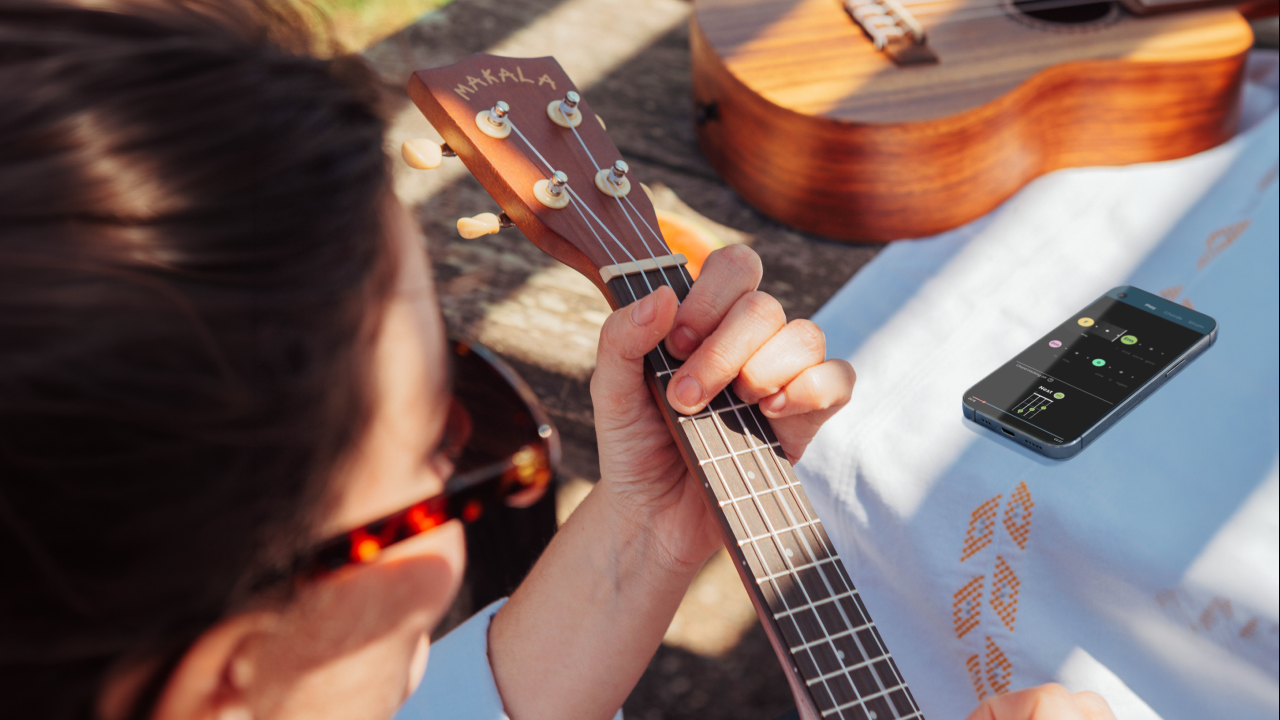
For most beginners, the ukulele is the easier instrument to learn first. It has fewer strings, softer nylon strings that are gentler on your fingertips, and a smaller body that feels manageable from day one. That said, the right choice depends on the music you love and what you want to do with it long-term. The questions below break down every angle of the ukulele vs guitar decision so you can pick the one that actually fits you.
Is ukulele easier to learn than guitar?
Yes, the ukulele is generally easier to learn than guitar, especially for complete beginners. It has four strings instead of six, a shorter neck, and uses softer nylon strings that do not dig into your fingertips the way steel guitar strings do. Most beginners can play a recognizable song within their first few sessions.
The chord shapes on ukulele are also simpler. A C chord on ukulele is a single finger on one string. On guitar, the same chord requires three fingers across three strings. That difference matters a lot in the early weeks when your fingers are still building strength and muscle memory.
The smaller body also helps. Holding a ukulele feels a bit like holding a friendly toy compared to an acoustic guitar, which can feel unwieldy at first. That physical comfort keeps beginners from tensing up, and relaxed hands learn faster.
It might feel a little tricky at first regardless of which instrument you choose, but the ukulele’s learning curve is genuinely shorter. Most people are strumming through full songs within a few weeks rather than a few months.
What are the main differences between ukulele and guitar?
The main differences between ukulele and guitar are the number of strings, string material, tuning, physical size, and the range of sounds each instrument can produce. A ukulele has four nylon strings tuned G-C-E-A. A guitar has six strings, typically steel on acoustic and electric models, tuned E-A-D-G-B-E. These differences shape everything from how you hold the instrument to how long it takes to get your first clean chord.
Strings and tuning
Ukulele strings are nylon, which means they are softer under the fingers and easier on beginner fingertips. Guitar strings, especially steel-string acoustic models, require more finger pressure and will cause soreness until calluses build up. The ukulele’s four-string layout also means fewer notes to think about at once, which simplifies chord shapes and scales significantly.
Size and sound
A standard soprano or concert ukulele is small enough to sit in your lap comfortably. A guitar requires a wider arm span and more body contact to hold properly. In terms of sound, a guitar has a broader tonal range, more volume, and more low-end depth. A ukulele has a bright, warm, distinctly cheerful tone that suits pop, folk, and island-style music beautifully but does not cover every genre equally well.
Does learning ukulele first help you learn guitar later?
Yes, learning ukulele first gives you a real head start on guitar. The core skills transfer directly: reading chord diagrams, training your fretting hand, developing strumming rhythm, and understanding song structure all carry over. Many players who start on ukulele find the jump to guitar feels less overwhelming because the fundamentals are already in place.
The chord shapes are different, and guitar adds two extra strings to manage, but the muscle memory you build on ukulele is not wasted. Your fretting hand already knows how to press cleanly, your strumming hand already has rhythm, and you already understand how chords connect to make a song.
Think of it like learning to ride a bike before a motorcycle. The balance, the steering instinct, the sense of the road, those things transfer. The motorcycle is bigger and faster, but you are not starting from zero.
If your long-term goal is guitar, starting on ukulele is a smart move, not a detour.
Which instrument is better for the style of music you want to play?
The best instrument for you depends entirely on the music you want to play. Ukulele suits pop, folk, Hawaiian, indie, and acoustic singer-songwriter styles extremely well. Guitar covers a wider range, including rock, blues, country, classical, and metal. If the songs you love are mostly driven by a bright, strummed acoustic sound, ukulele will get you there faster and more enjoyably.
Here is a simple way to think about it: listen to the songs you actually want to play. If they sound like they belong on a beach or around a campfire with a cheerful, light tone, ukulele is a natural fit. If the music you love is built on heavy power chords, deep bass lines, or complex fingerpicking, guitar is the better long-term choice.
That said, the ukulele’s song range is broader than most people expect. Pop hits, classic rock songs, and even jazz standards can all be arranged for ukulele. The Kala App’s song library covers 2,000+ tracks across genres, which gives you a good sense of just how much is playable on four strings.
If you are genuinely torn, ask yourself which instrument makes you more excited to pick up and practice. Motivation is the single biggest factor in whether a beginner sticks with it.
Should you choose ukulele or guitar based on your budget?
Ukulele is the more budget-friendly starting point. A decent beginner ukulele costs significantly less than a comparable beginner guitar, and accessories like tuners, cases, and spare strings are cheaper too. If budget is a real consideration, ukulele lets you get started with a quality instrument without a large upfront investment.
A playable soprano or concert ukulele can be found for a fraction of the price of a beginner acoustic guitar, and it will still hold its tuning, stay in one piece, and sound good enough to learn on. A very cheap guitar, on the other hand, is often harder to play because the action (the distance between the strings and the fretboard) is too high, which makes pressing chords physically demanding and discouraging.
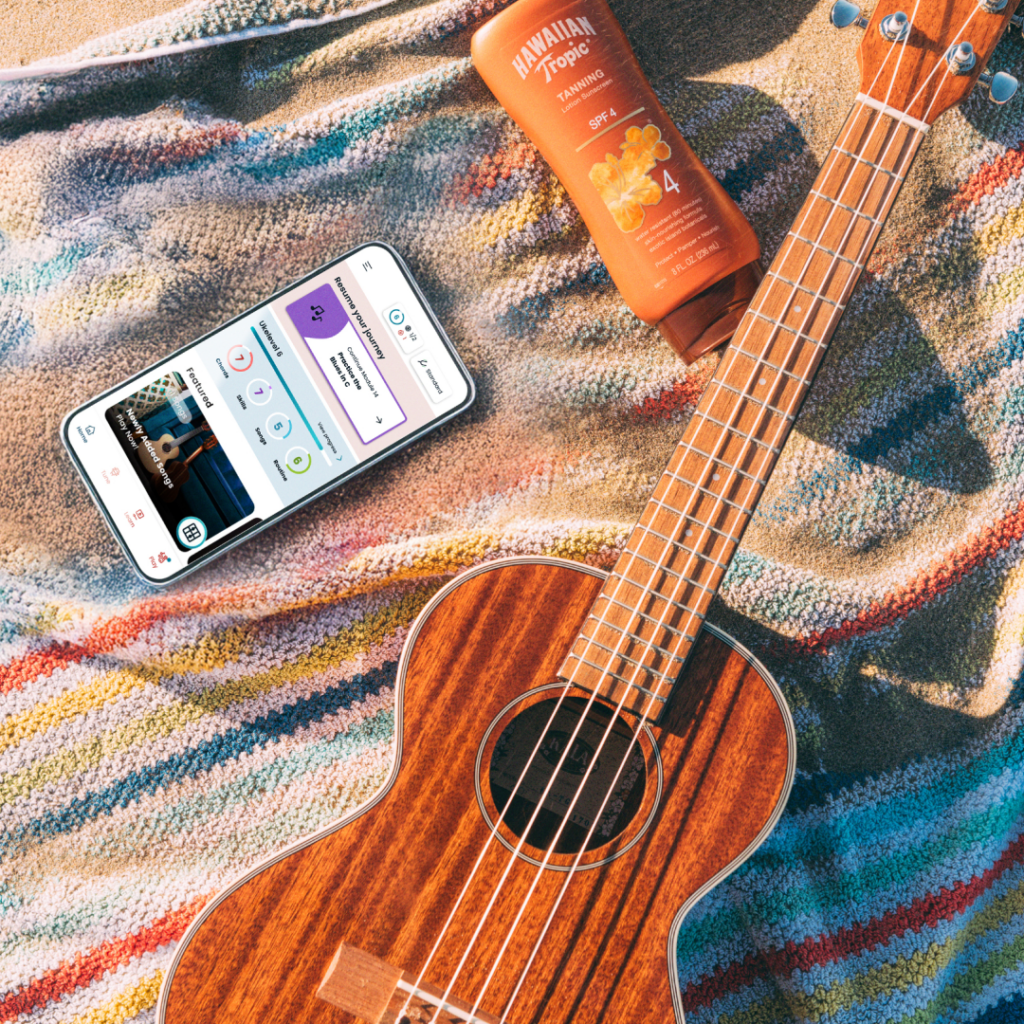
Beyond the instrument itself, choose your learning resources according to your like and needs. Structured apps like the Kala Ukulele App offer free built-in tuner, introductory lessons, and a selection of songs to practice on without spending anything. That means you can test whether you enjoy playing before committing to a premium subscription or a more expensive instrument.
If budget is tight, start with ukulele. You will spend less, learn faster, and still be building skills that carry over if you decide to pick up a guitar down the road. Now go find a song you love and start learning it. You have got this.