

Kids can start learning ukulele from around age 4 or 5, making it one of the earliest instruments a child can pick up. The ukulele’s small size, soft nylon strings, and simple chord shapes make it genuinely accessible for small hands and short attention spans. This article covers everything from choosing the right size to keeping practice fun, so you can set your child up for a great start.
What age can kids start learning ukulele?
Most children are ready to start learning ukulele between ages 4 and 6. At this age, kids have enough finger strength to press the strings and enough focus to follow simple instructions. Some children start even younger with a parent guiding their hands, while older beginners from age 7 upward can typically progress faster and handle structured lessons more easily.
The honest answer is that age matters less than readiness. A child who can sit still for 10 minutes, follow a short instruction, and hold a small object with both hands is ready. A child who isn’t quite there yet will get frustrated, and that frustration can stick around longer than the lesson. If your child shows curiosity about music or wants to copy someone they’ve seen playing, that’s a better green light than any age chart.
Early starters do best with very short sessions – five to ten minutes is plenty for a 4 or 5 year old. As attention spans grow, so can the practice time. The key is keeping it playful rather than pressured, especially in the first few months.
What size ukulele is best for a child?
A soprano ukulele is the best size for most children. It’s the smallest standard ukulele, typically around 53 cm long, and fits naturally in small hands.
It is also light and affordable. You can even get plastic, relatively good, “real” ukuleles for outdoor activities.
Avoid tenor and baritone ukuleles for younger beginners. The wider fretboards and longer scale lengths make chord shapes harder to reach, which adds unnecessary difficulty before a child has even learned their first song. The goal at the start is to remove obstacles, not create them.
One practical tip: tune the ukulele before every session. An out-of-tune instrument sounds wrong no matter how well a child plays, and that disconnect is discouraging. A built-in tuner – like the one in the Tune tab of the Kala App – makes this quick and accurate before each practice.
How do you teach a child their first ukulele chords?
Start with the C chord. It only requires one finger on one string, which means a child can get a clean sound almost immediately. That early win matters more than you might think – it tells a child that this is actually possible. Once C feels comfortable, move to Am, then F, and save G for last, as it needs three fingers and takes a little more practice to get clean.
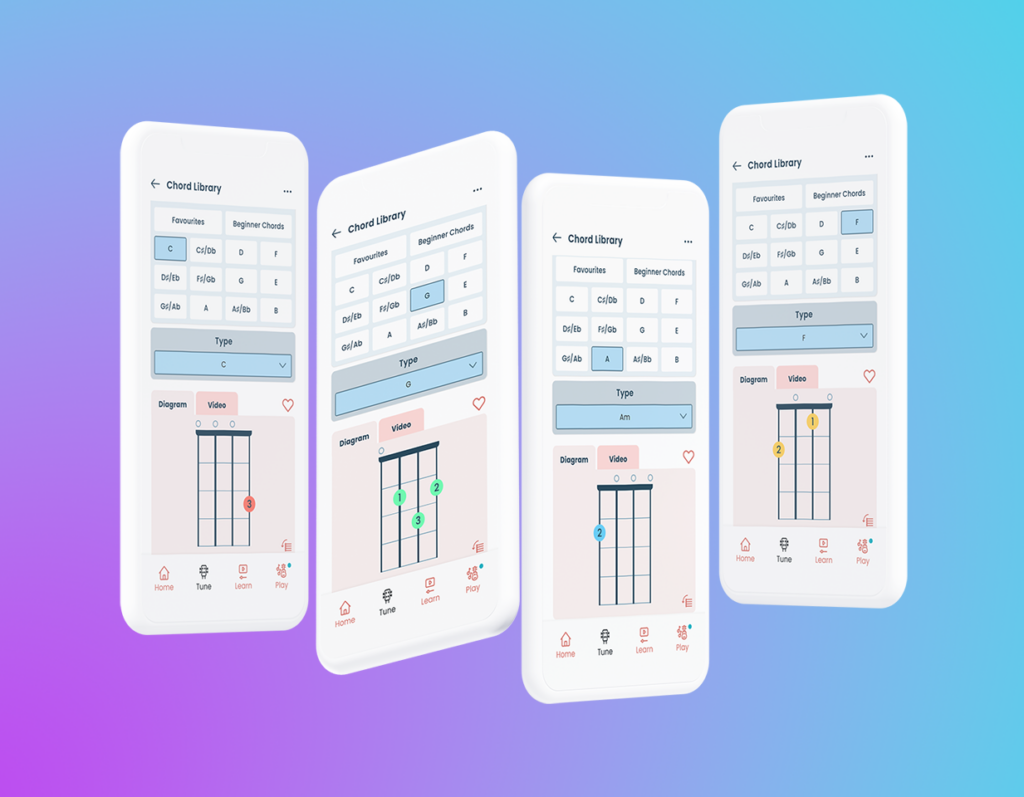
Think of chord learning like musical chairs. You keep your eye on the next chord and move your fingers when it’s time – not before, not after. That mental image helps children understand that the goal isn’t perfect placement every time, it’s keeping the music moving. It’s okay if the first few switches sound rough. They always do at first, and that passes faster than it feels like it will.
A few things that help young learners specifically:
- Name the fingers: Calling them “pointer,” “middle,” and “ring” rather than numbers keeps it concrete for younger kids
- Use chord diagrams: A visual map of where fingers go is far easier to follow than a verbal description
- Practice two chords at a time: Don’t introduce a third chord until the first two feel automatic
- Play a song immediately: Even a simple two-chord song makes the chords feel purposeful, not like exercises
Should kids take ukulele lessons in person or use an app?
Both work well, and the best choice depends on your child’s learning style, your schedule, and your budget. In-person lessons offer real-time feedback from a teacher who can physically adjust a child’s hand position and respond to their personality in the moment. A good teacher is hard to beat for a child who needs that direct connection. Apps offer flexibility, lower cost, and the ability to repeat lessons as many times as needed without anyone feeling embarrassed.
For many families, an app is the more practical starting point. A child can explore at their own pace, revisit a lesson that didn’t click, and practice on a Tuesday evening without needing to book anything. The Kala App’s structured Learning Path – designed by real ukulele teachers including UkuLenny – guides children through the foundations in bite-sized lessons, with chord diagrams and real-time feedback built in. It works on any ukulele, not just Kala instruments.
The two approaches also combine well. Some families use an app for daily practice and in-person lessons once a week to check technique and stay motivated. If cost is a factor, starting with an app and adding occasional in-person check-ins is a sensible approach that keeps progress moving without a large ongoing commitment.
How do you keep kids motivated to practice ukulele?
The single most effective way to keep a child motivated is to let them play songs they actually love. Technique exercises have their place, but a child who spends every session on drills will lose interest quickly. As soon as a child knows two or three chords, find a song they recognise and love that uses those chords. That moment of playing something real is what makes practice feel worth showing up for.
A few other approaches that genuinely help:
- Keep sessions short: Ten to fifteen minutes of focused practice beats a reluctant forty-minute session every time
- Celebrate small wins: Finishing a song all the way through, learning a new chord, or playing without stopping – all worth acknowledging
- Let them choose songs: Ownership over the repertoire goes a long way with kids
- Play together: Strumming along with a parent or sibling makes practice social, not solitary
- Track progress visibly: Kids respond well to seeing what they’ve achieved – completed lessons, songs they can now play, milestones hit
It’s also okay to have off days. If a child doesn’t want to practice, pushing through frustration rarely ends well. A short, fun session three days a week will take a child further than a daily battle of wills. Progress on the ukulele is a marathon, not a sprint – and the kids who stick with it are almost always the ones who had fun doing it.
Now get out there and strum something together. You’ve got this.