
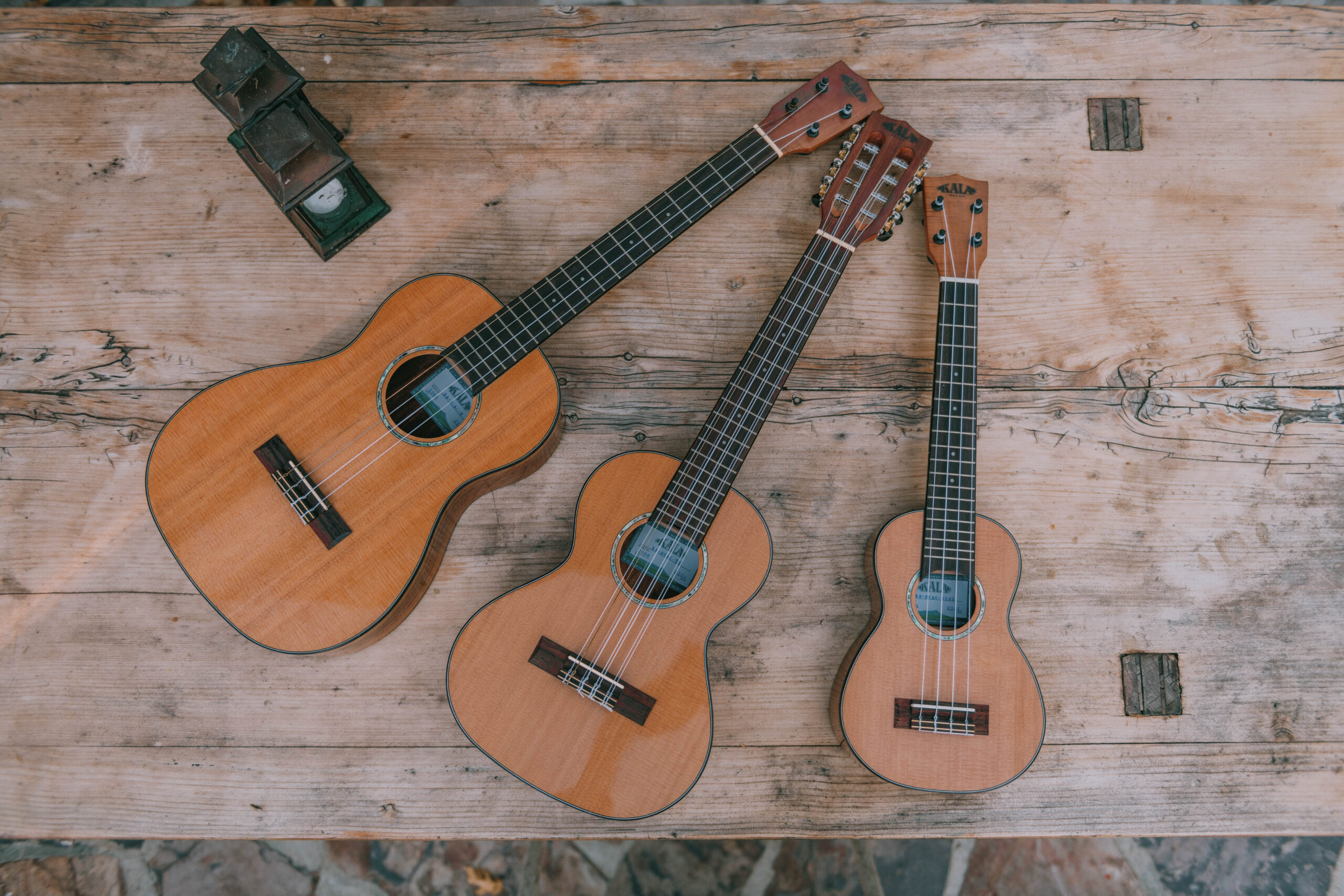
For most beginners, a soprano or concert ukulele is the best size to start with.
Concert Ukulele offers a comfortable neck width, a slightly fuller sound than a soprano, and a body size that works well for most adult hands. That said, the right ukulele size depends on a few practical factors: your hand size, your age, and the kind of music you want to play.
The good news is that (apart from baritone ukuleles) the standard sizes share the same tuning and the same chord shapes, so switching between them later is straightforward. Below, you’ll find answers to the most common size questions beginners ask before buying their first uke.

What are the four main ukulele sizes?
The four main ukulele sizes are soprano, concert, tenor, and baritone. Soprano is the smallest and produces the bright, classic ukulele sound most people picture. Concert is slightly larger with a warmer tone. Tenor is bigger again, with a fuller, richer sound popular with performers. Baritone is the largest and uses different tuning.
Here is a quick breakdown of each:
- Soprano — the traditional ukulele size, around 21 inches long. Light, bright, and easy to carry anywhere.
- Concert — around 23 inches. A little more room on the fretboard, a slightly warmer tone, and still very portable.
- Tenor — around 26 inches. Bigger body, more volume, favoured by players who want a guitar-like feel.
- Baritone — the largest at around 30 inches. Tuned differently (D-G-B-E instead of G-C-E-A), which means chord shapes do not transfer directly from the other three sizes. On the other hand, this tuning can be easier for guitar players – think of it having the four thinnest strings of a guitar.
For most beginners, soprano, concert, and tenor are the practical choices. Baritone is a wonderful instrument, but its different tuning means the lessons and chord diagrams designed for standard ukulele tuning will not apply without some adjustment. If you are just starting out, sticking with one of the first three sizes keeps things simple.
What’s the difference between soprano and concert ukulele?
The key difference between soprano and concert ukulele is size, which affects both playability and tone. A soprano is smaller with tighter fret spacing and a bright, slightly twangy sound. A concert is a little larger, with more space between frets and a warmer, rounder tone. Both use standard G-C-E-A tuning and the same chord shapes.
In practical terms, the fret spacing is the most noticeable difference when you are learning. On a soprano, the frets sit closer together, which can feel cramped if you have larger hands or longer fingers. A concert gives you a bit more room to place your fingers cleanly without accidentally muting a neighbouring string.
Tone is the other factor. Soprano ukuleles have that instantly recognisable, slightly chirpy sound. Concert ukuleles are a touch mellower and project a little more volume. Neither is better. It really comes down to which sound you love and which feels comfortable under your fingers.
If you are torn between the two, try holding both if you can. The one that feels natural in your hands is almost always the right answer.
Which ukulele size is easiest to learn on?
A concert ukulele is generally the easiest size for beginners to learn on. The fret spacing is comfortable for most adult hand sizes, the body is light and manageable, and the tone is forgiving enough that early chord attempts sound decent even before technique is polished. Soprano works well too, especially if you have smaller hands.
The reason concert edges ahead for most people comes down to finger placement. When you are learning to fret chords cleanly, a little extra space between the frets makes a real difference. It is easier to press one string without accidentally touching the one next to it, which means cleaner sound and less frustration in those early sessions.
Tenor is also a solid choice if you have larger hands or you are coming from a guitar background. The wider neck and longer scale length feel more familiar to guitar players, and the fuller sound can be encouraging when you are just starting out.
The one size to approach with caution as a complete beginner is baritone. Its different tuning means beginner resources written for standard ukulele will not match what you are holding. That creates an unnecessary extra layer of confusion when you are still finding your feet.
Should a child get a different ukulele size than an adult?
Yes, younger children generally do better starting on a soprano ukulele. The smaller body and shorter neck suit smaller hands and shorter arms, making it easier to reach the frets and hold the instrument comfortably. Adults and older teenagers, on the other hand, may find concert or tenor more comfortable.
That said, these are guidelines, not rules. A small-handed adult might love a soprano, and a tall twelve-year-old might feel perfectly at home on a tenor. The most useful test is whether the player can wrap their fretting hand around the neck without straining. If the reach feels awkward, the instrument is probably too big.
Does ukulele size affect which songs you can play?
No, ukulele size does not limit which songs you can play, as long as you are using soprano, concert, or tenor. All three share the same standard G-C-E-A tuning and the same chord shapes, so any song written for ukulele works on any of these sizes. The difference is in tone and feel, not repertoire.
This is one of the most reassuring things about learning ukulele. The chord you learn on a concert ukulele is the same chord on a soprano or tenor. If you start on one size and later switch, your skills transfer completely. Nothing is wasted.
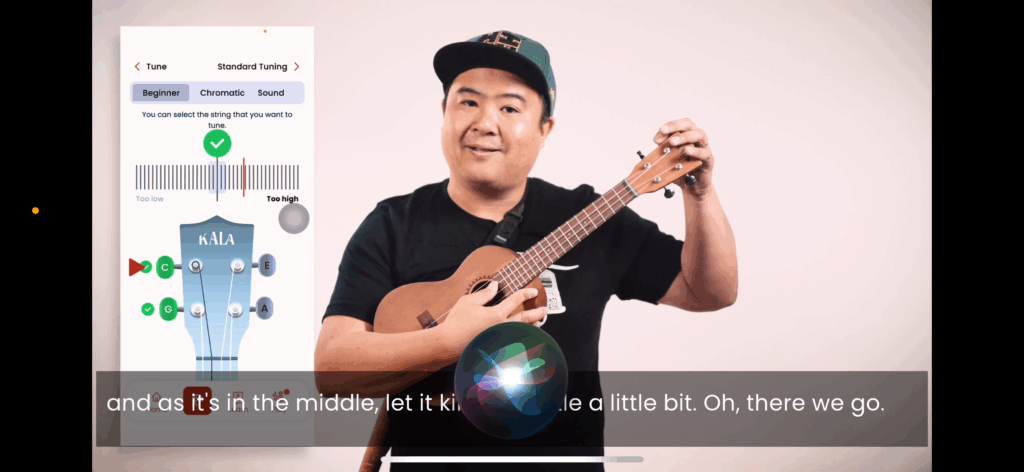
Baritone is the exception. Because it uses different tuning, chord shapes do not match standard ukulele tabs and chord charts. If you are learning from an app, a songbook, or online lessons built around standard tuning, a baritone will require some translation. However, in Kala App, just select the baritone mode and all the chords and diagrams will be translated for you.
The Kala App’s song library covers 2,000+ songs with chords and lyrics that work for any ukulele model, so whichever of size you choose, you will have plenty to play from day one. Now go find the size that feels right in your hands, and get strumming.
You can find a learning path from an absolute beginner to a confident ukulele player, in the app too.