

The most effective way to practice ukulele is to keep sessions short, focused, and consistent. Fifteen to twenty minutes every day will move you forward faster than a two-hour session once a week. This article unpacks the questions most players have about building a practice routine that actually sticks.
How long should you practice ukulele each day?
For beginners, fifteen to twenty minutes of focused daily practice is the sweet spot. That is enough time to warm up your fingers, work on one or two skills, and run through a song you enjoy. Short, consistent sessions build muscle memory far more effectively than longer sessions crammed into the weekend.
Think of it like learning a new language. A few minutes every day keeps the vocabulary fresh. A marathon session on a Sunday does not. Your fingers need repetition spread across time, not volume in one sitting.
As you get more comfortable, you can stretch sessions to thirty minutes or longer. But when you are starting out, twenty minutes of real focus beats an hour of distracted noodling every time. If you only have ten minutes on a given day, use them. Showing up matters more than how long you stay.
What should a ukulele practice session include?
A solid ukulele practice session has three parts: a short warm-up, focused skill work, and time playing a song you enjoy. That structure keeps sessions balanced and makes sure you are always moving forward on something technical while also having fun.
Here is a simple framework to follow:
- Tune up first. Every session starts with a tuned ukulele. A chromatic tuner takes thirty seconds and means everything you practice sounds the way it should.
- Warm up your fingers. Spend two or three minutes moving through chords you already know. Nothing challenging, just getting your hands loose.
- Work on one skill. Pick one thing: a chord transition, a new chord shape, or a strumming pattern. One thing, done well, is worth more than five things done poorly.
- Play a song. End every session on something that feels like music. Even if it is slow and a little rough, finishing on a song reminds you why you picked up the ukulele in the first place.
If you use the Kala App, the structured Learning Path takes the guesswork out of that middle section. Each lesson is designed to build on the last, so you always know exactly what to focus on.
How do you get better at chord changes on ukulele?
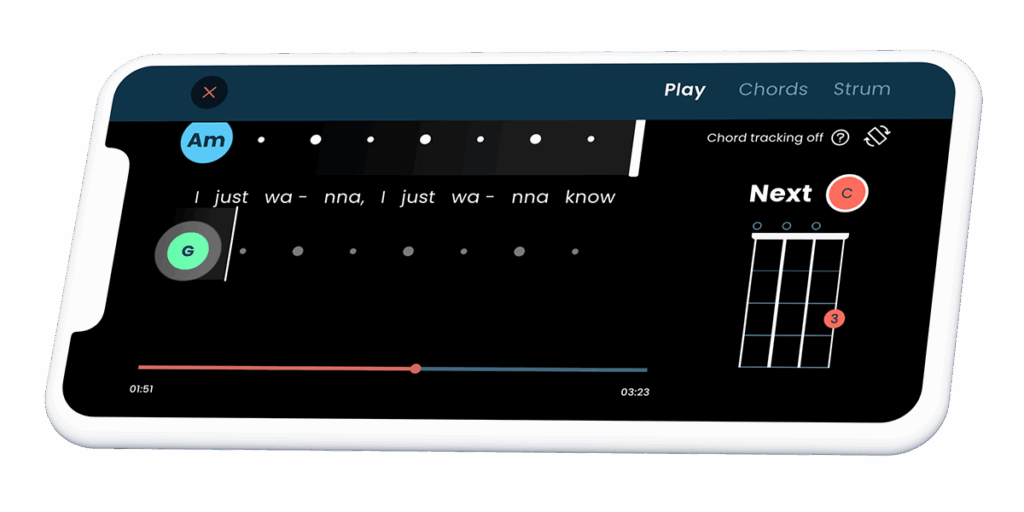
The key to faster chord changes is to practice the transition in isolation, slowly, until the movement becomes automatic. Pick two chords and move between them repeatedly, focusing on getting your fingers to land in the right place without looking. Speed comes after accuracy, not before.
Here is a tip that works well: think of it like musical chairs. You keep your eye on the next chord shape before you need it. Your fingers start moving while the last strum is still ringing. That small overlap is what makes transitions sound smooth instead of choppy.
A few things that speed up the process:
- Practice the two-chord switch before adding a third or fourth chord into the sequence
- Use a slow backing track or metronome so the rhythm gives you a target to hit
- If a finger can stay in the same position between two chords, keep it there and pivot around it
- It is okay if the change is not perfect at first. Keep going and try again on the next beat.
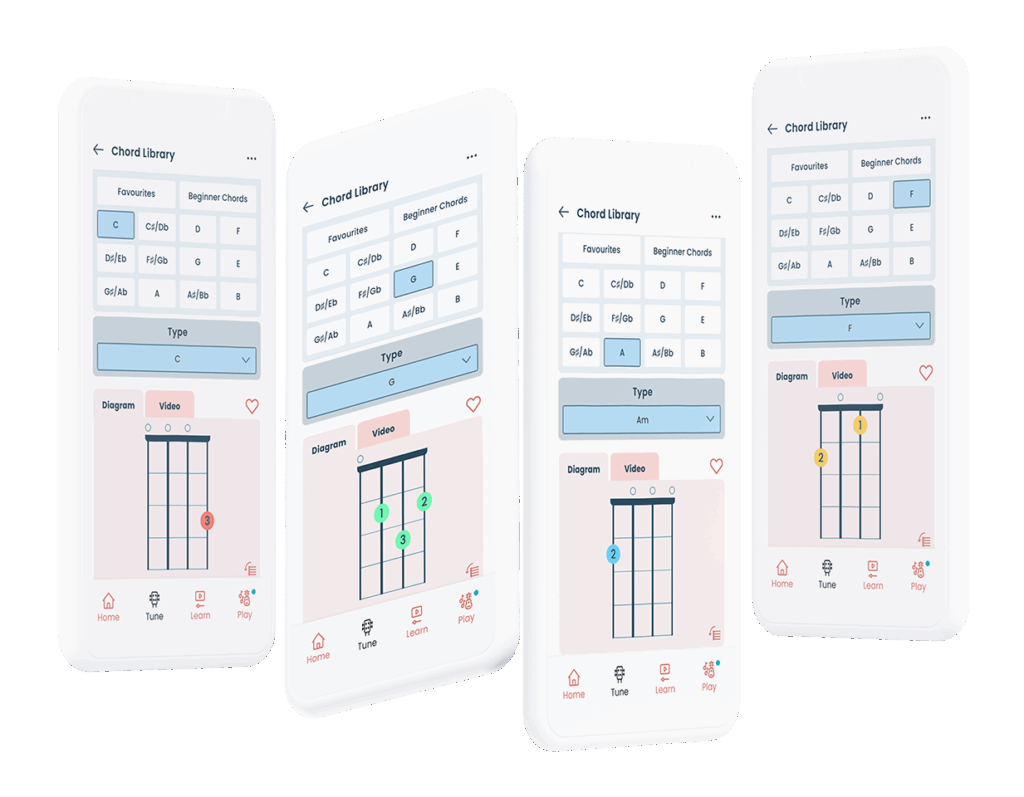
Start with the C to Am transition, which shares a common finger position. Once that feels comfortable, add C to F, then bring in G. That order matters because G takes a bit more practice than the others. It clicks faster than it feels like it will.
Should you learn songs or scales when practicing ukulele?
For most ukulele players, especially beginners, learning songs is more valuable than practicing scales. Songs give you a real musical context for the chords and rhythms you are building, keep practice enjoyable, and give you something to actually play for other people. Scales have their place, but they are not where most players should spend their early practice time.
Scales become more useful once you want to understand melody, improvise, or move into more advanced playing. At the beginner and intermediate stage, the skills that move you forward fastest are chord fluency, chord transitions, and strumming rhythm, all of which you develop directly by playing songs.
The practical approach is to let songs drive your practice and use scales as a tool when a specific goal calls for them. If you are working through the Kala App’s Learning Path, the lesson structure already reflects this. Songs are woven into the learning from early on, so you are always playing real music while building the underlying skills.
Why do ukulele players stop making progress?
The most common reason ukulele players plateau is that they keep practicing what they already know instead of pushing into what they cannot yet do. Playing the same three songs on repeat feels comfortable, but it does not build new skills. Progress lives just outside the edge of what feels easy.
A few other patterns that stall progress:
- Inconsistent practice. Gaps of several days between sessions mean skills do not stick. Short daily practice beats long occasional sessions.
- No clear focus. Sitting down without a goal leads to noodling rather than improving. Knowing what you are working on before you pick up the ukulele makes every session more productive.
- Skipping the hard parts. Most players naturally avoid the chord or transition that feels awkward. That exact thing is what deserves the most attention.
- No way to measure progress. Progress can feel invisible in the early stages, which is one of the reasons beginners give up before they reach the good part. Tracking completed lessons and songs makes that momentum visible rather than something you have to take on faith.
If you have been feeling stuck, pick one specific weak spot and spend a week working on nothing else in that skill slot. That kind of focused repetition is usually all it takes to break through. You have got this. Uke on.