

“I’m Yours” by Jason Mraz is one of those songs that feels made for the ukulele. The laid-back groove, the sunny chords, the kind of melody that gets stuck in your head for days — it all fits the instrument like it was written on one. Good news: it practically was. This is one of the most popular beginner ukulele songs around, and for good reason. The four chords you need are exactly the four chords every new player learns first.
This guide walks through the I’m Yours ukulele chords, the strumming pattern that gives the song its feel, and how to put it all together into something that sounds like the real thing. Whether you’ve been playing for a week or a month, this one is well within reach.
Chords you need to play I’m Yours

The I’m Yours chords for ukulele are four shapes that show up in hundreds of songs: C, G, Am, and F. If you’ve already spent some time with these, you’re closer than you think. If a couple of them are still new, here’s a quick rundown of each one.
C major
C is the friendliest chord on the ukulele. Place your ring finger on the third fret of the bottom string (the A string — the one closest to the floor when you’re holding the uke). That’s it. One finger, clean tone.
G major
G takes a bit more practice than the others — three fingers instead of one or two. Place your index finger on the second fret of the C string, your middle finger on the second fret of the A string, and your ring finger on the third fret of the E string. It can feel like a stretch at first. That’s completely normal, and it clicks faster than it feels like it will.
Am (A minor)
Am is a one-finger chord: place your middle finger on the second fret of the G string (the top string — the one closest to you). Nice and easy!
F major
F uses two fingers. Place your index finger on the first fret of the E string and your middle finger on the second fret of the G string. Keep both fingertips close to the fret to avoid any buzzing.
Once you can get each chord to ring cleanly on its own, start moving between them slowly. The C to Am switch is a good place to begin — those two share a comfortable hand position. Then try C to F, and finally bring G into the mix.
The strumming pattern that makes the song sound right
The strumming pattern for “I’m Yours” is what gives it that breezy, island feel. The pattern most players use is a D-DU-UDU rhythm — down, down-up, up-down-up.
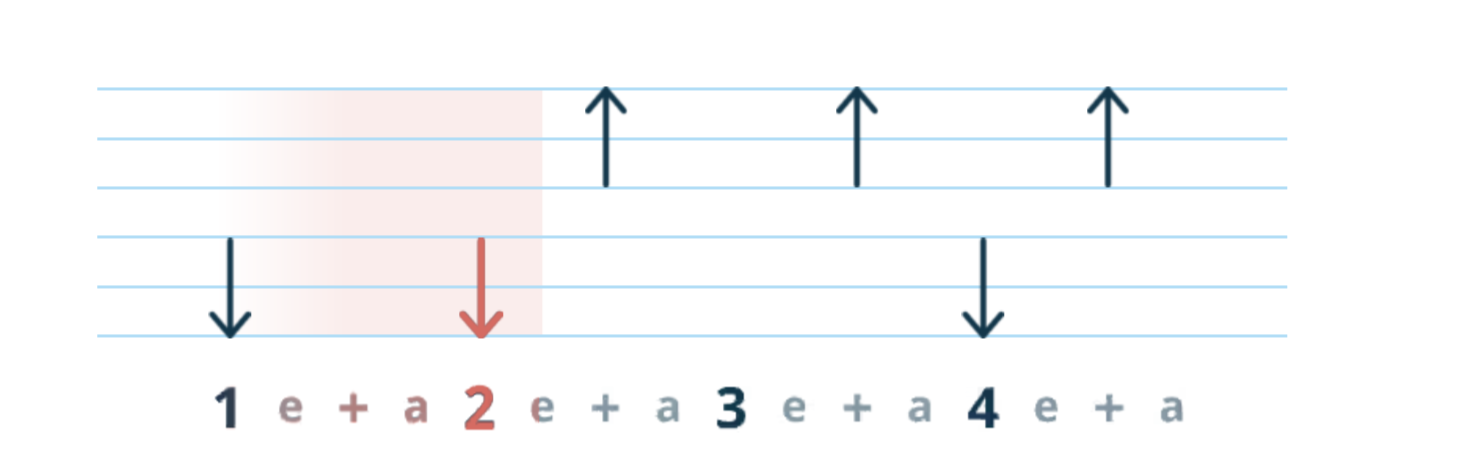
I like to think of the strumming hand as a paintbrush making long, loose sweeps across the strings. The motion comes from the wrist, not the whole arm. Keep it relaxed. If your arm is tense, the sound will be stiff, and this song is anything but stiff.
It might feel awkward at first — that passes faster than you’d expect. Start slow and just get the direction of each strum right before worrying about speed. Once you get that feel, the tempo will come naturally. You don’t have to nail the full pattern right away. Even a simple down-strum on every beat will get you through the song while you’re building up to it.
Putting the chord progression together
The chord progression for “I’m Yours” follows a satisfying loop that repeats throughout almost the entire song: C — G — Am — F. Four chords, four beats each, cycling around and around.
Think of the chord changes like musical chairs. Keep your eye on the next chord, and move to it when the moment comes. You don’t have to wait for the previous chord to sound perfect before you move — it’s okay to leave a little early as long as you catch the next chord on time. The song keeps moving, and so should you.
Start by playing through the progression slowly, just strumming once per chord. Get comfortable with the shape of each transition. Then add the strumming pattern once the chord changes feel more automatic. Trying to juggle both at once from the start is how most beginners stall — so take it one layer at a time.
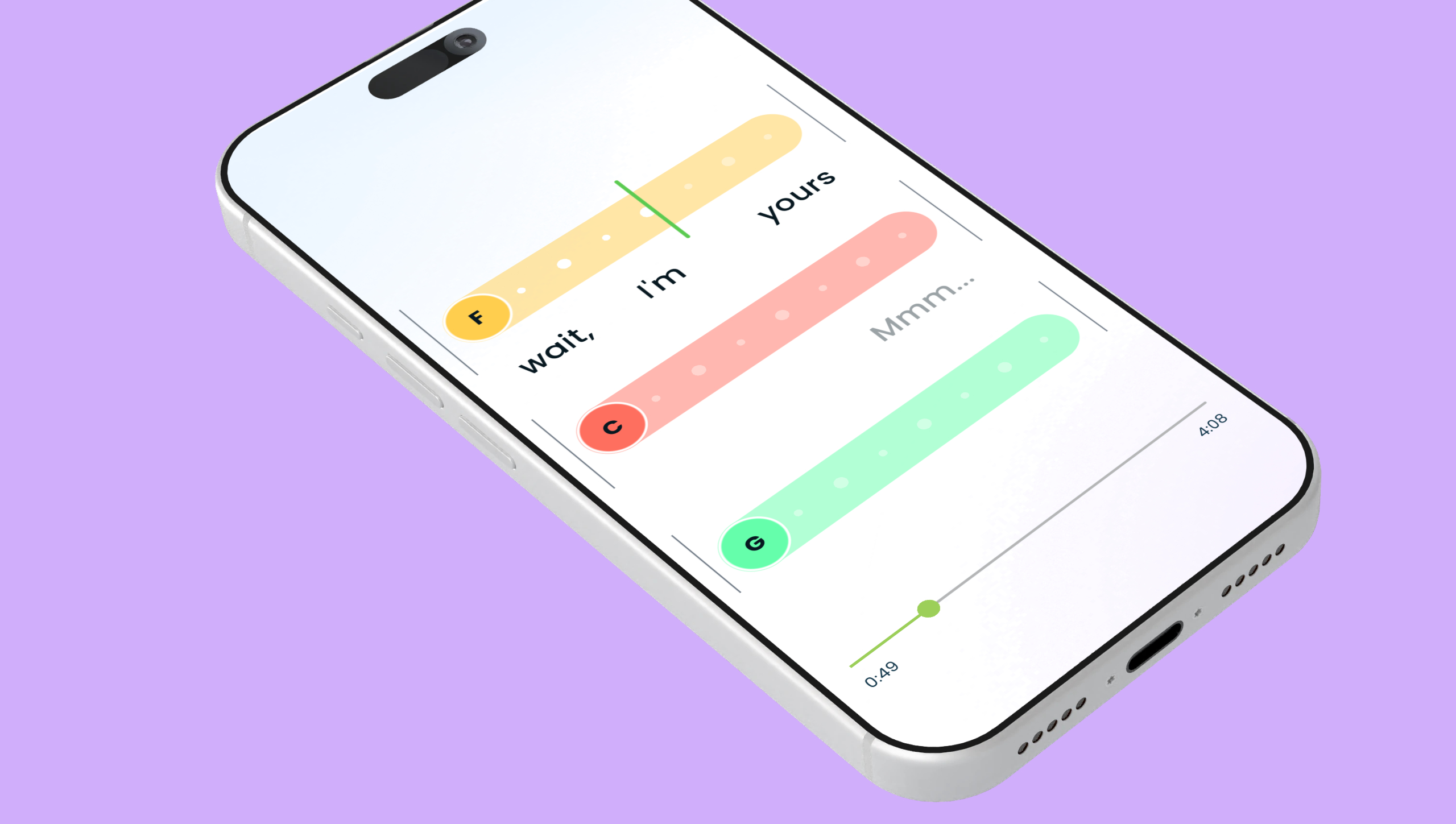
When you feel ready to play along with the actual song, use the tempo slider in the Kala App to slow the track down to whatever speed feels manageable. You can speed it back up gradually as the changes become second nature. The goal is to keep the music flowing — even at half speed, it should feel like a song, not an exercise.
Other beginner-friendly songs to learn next
Once “I’m Yours” feels comfortable, the good news is that you’ve already learned the chords for a huge chunk of the beginner ukulele repertoire. The C, G, Am, F combination appears in more popular songs than almost any other four-chord set.
Here are a few directions worth exploring next:
- Something that uses just two or three of the same chords — songs built on C, Am, and F (without G) are a great step if G is still giving you trouble. They let you keep playing real music while that chord continues to develop.
- A song with a different strumming pattern — using the same four chords with a new rhythm is one of the fastest ways to build strumming flexibility. It trains your ear to hear how rhythm changes a song’s entire feel.
- A song in a different key — once C, G, Am, and F are solid, adding chords like D, Em, or Bb opens up a whole new set of songs. Each new chord shape you learn adds to the number of songs you can play.
The Kala App’s song library lets you filter by chords you already know, so you can find songs that match exactly where you are right now — no guessing, no frustration. Browse by C, G, Am, and F and see how many songs are already within reach.
You’ve got the chords, you’ve got the pattern, and you’ve got a song that people genuinely love to hear. Now get out there and play it. Uke on.