

Two chords. That’s all it takes to play a complete song on the ukulele — not a simplified version, not a warm-up exercise, but an actual song from start to finish. For anyone just picking up the instrument, that’s a genuinely exciting place to start. Two-chord ukulele songs give beginners a real win early, which is exactly the kind of momentum that keeps people playing.
This guide covers the best easy ukulele songs to learn with just two chords, which chord pairs unlock the most repertoire, and how to practice them so the transitions start to feel natural. By the end, you’ll have a handful of songs ready to play all the way through.
The best 2-chord ukulele songs to learn first
The most beginner-friendly two-chord songs tend to use chords that sit close together on the fretboard, so the switch between them doesn’t require a big physical leap. The C and Am combination is a great place to start — both chords are simple shapes, and the transition between them is one of the smoothest on the ukulele.
Songs worth learning right away
Here are some well-known beginner traditional ukulele songs built on just two chords — or simplified down to two chords to get you started:
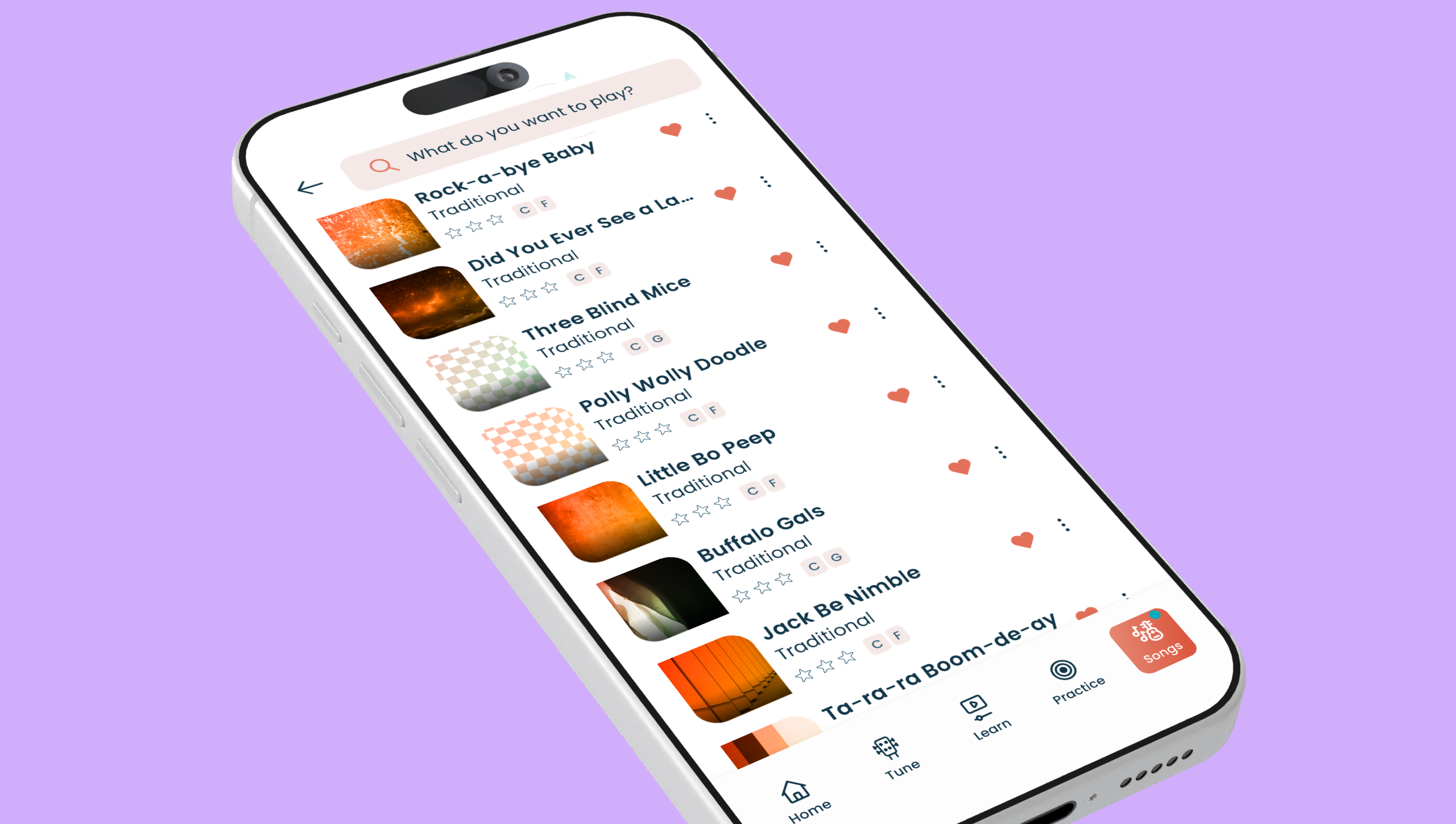
It’s okay if the chord changes feel a little slow at first. That’s completely normal, and it passes faster than most beginners expect. The goal at this stage isn’t speed — it’s getting through the song without stopping. You can change the song tempo in the Kala Ukulele App.
Which 2-chord combinations unlock the most songs
Not all two-chord pairs are equal. Some combinations appear across dozens of songs; others are more niche. Knowing which pairs to prioritise means your practice time goes further.
The most versatile two-chord combinations for simple ukulele songs are:
- C and G — one of the most common pairs in folk, pop, and country. C is a single-finger chord; G takes a bit more practice, but once both feel comfortable, the repertoire opens up significantly.
- C and Am — smooth, close together on the neck, and the foundation of countless pop songs. This is the most beginner-friendly pairing on the list.
- Am and Em — the pairing at the heart of Ain’t No Sunshine, and one of the most natural transitions on the fretboard. The two shapes share a similar hand position, which makes switching between them feel almost effortless once the muscle memory is there.
(You can skip the Dm for now, just let it go buy in the play-along screen for now.) - Am and F — slightly moodier in feel, and a natural stepping stone because F introduces a small barre shape that will come up again later.
If there’s one pair to start with, C and Am is the answer. The shapes are simple, the transition is forgiving, and the songs that use them are genuinely recognisable. Once that switch feels automatic, adding G turns those two-chord songs into three-chord songs — which is a bigger leap than it sounds.
How to practice 2-chord songs effectively
The biggest mistake most beginners make is trying to play the song at full speed before the chord change is reliable. Think of chord transitions like musical chairs — you keep your eye on the next chord shape before the switch actually happens, so when the moment comes, your fingers are already moving.
A simple practice method that works
Start by switching between the two chords without any rhythm at all. Just move back and forth — C to Am, Am to C — until the physical movement starts to feel familiar. Then add a single downstrum on each chord. Once that feels steady, bring in the actual strumming pattern.
Slowing the song right down is one of the most effective things to do here. It’s not cheating — it’s how the transition gets learned properly. The Kala App’s tempo slider lets you drop a song to whatever speed feels manageable, so the chord change can be practiced at a pace that actually works before gradually bringing it back up.
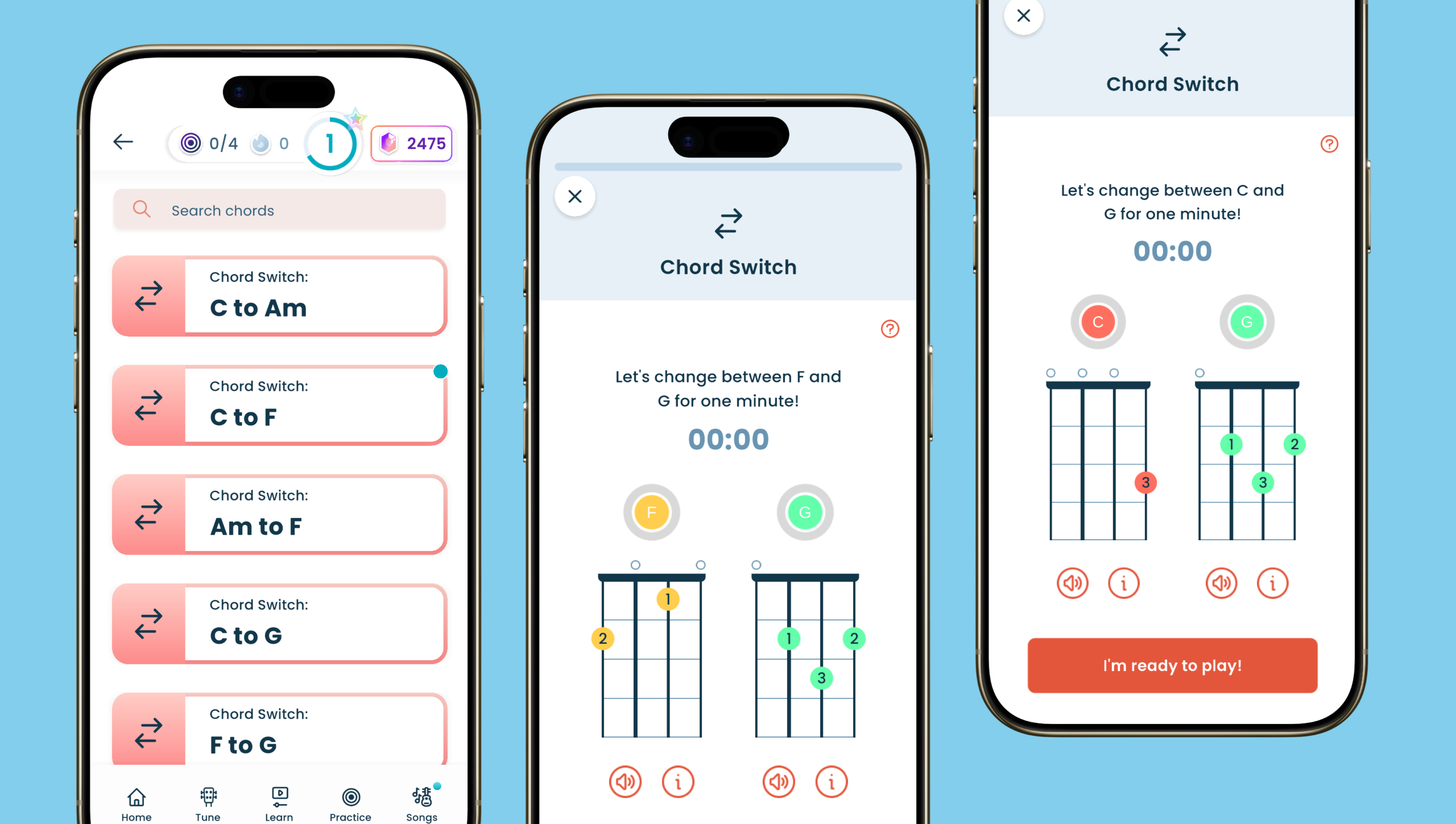
Chord transition drills
Set a timer for 60 seconds and count how many clean transitions you can make between two chords. Write the number down. The next day, try to beat it. Progress in this kind of practice can feel invisible otherwise — tracking it makes the improvement visible and keeps the motivation up.
It’s okay if it sounds a little rough at first. Keep going. Missing a chord and recovering is better practice than stopping and restarting, because real songs don’t pause for you.
Moving beyond 2 chords: what comes next
Two-chord songs are a starting point, not a ceiling. Once those transitions feel solid, adding a third chord turns a small skill into a much bigger repertoire almost immediately. Each song above already points toward a natural third step: Ain’t No Sunshine, Three Little Bird, , Don’t Worry Be Happy, and Folsom Prison Blues.
The natural progression from two chords looks like this:
- Get comfortable with C and Am.
- Add F — now three-chord songs are within reach.
- Add G — and the four core beginner chords (C, Am, F, G) are all in play.
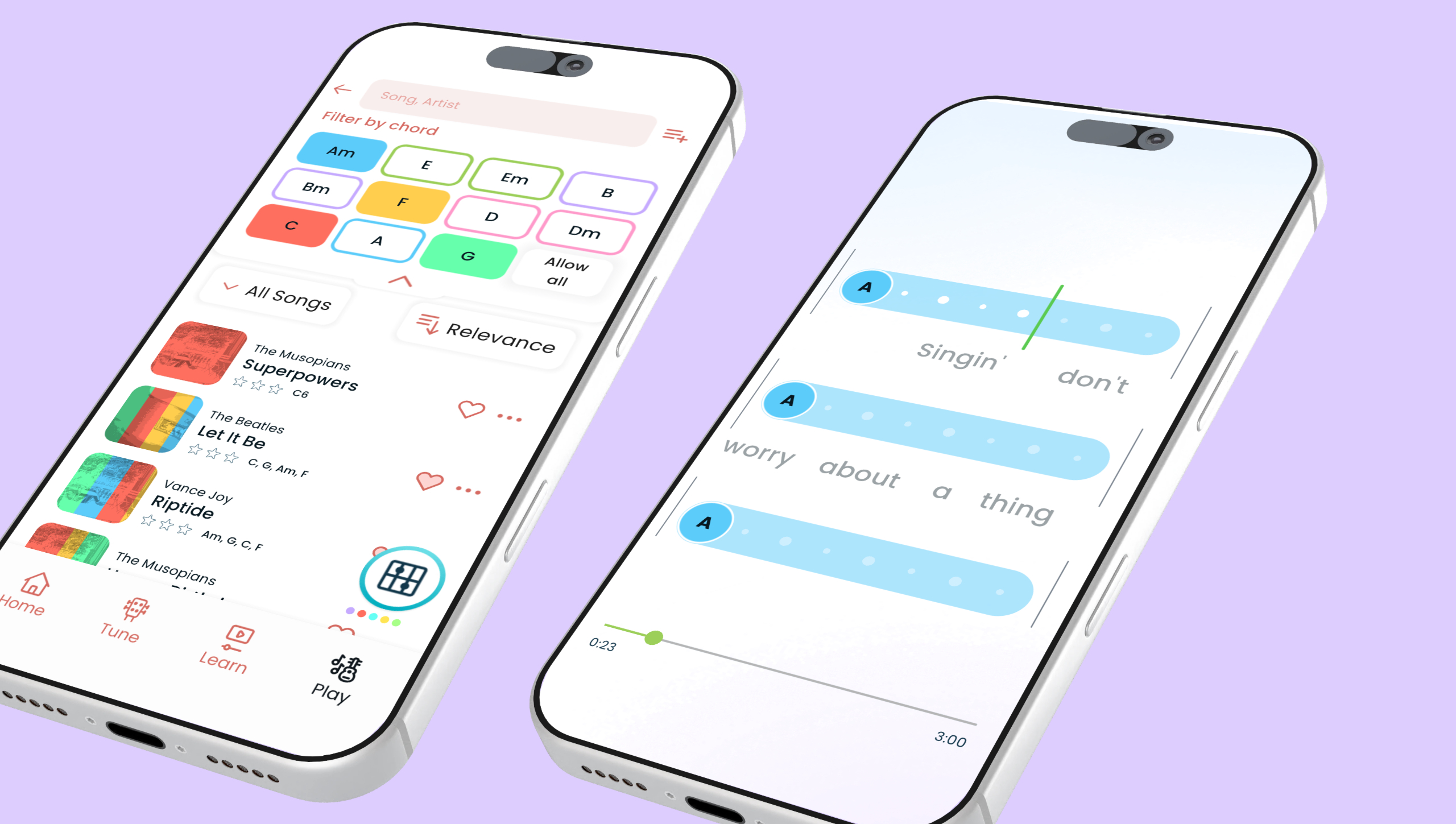
Those four chords appear in a huge proportion of popular music. The jump from two to three chords is where most beginners feel a real shift — suddenly the song library feels much less limited. There are hundreds of great songs with these four chords and the structured Learning Path in the Kala App, which is designed to guide this progression in exactly the right order, so each new chord is introduced when the previous ones feel solid. The chord library with 200+ fingering diagrams is there whenever a new shape needs a visual reference, and the song filter lets you search by chords you already know — so the next song to learn is always just a tap away.
Two chords got you started. Now go find out what three can do.