
Ukulele dynamics means controlling how loud or soft you play to shape the feel and emotion of a song. Rather than strumming at the same volume from start to finish, you vary your touch so that verses feel intimate, choruses feel full, and the music breathes. Every player can learn this, and it makes an enormous difference to how musical you sound.
Dynamics are not about playing perfectly in tune or nailing every chord change. They are about expression, the human quality that separates a performance from a run-through. The sections below answer the most common questions about ukulele dynamics and how to build them into your playing.
What are dynamics in music, and how do they apply to ukulele?
Dynamics in music are the variations in volume and intensity throughout a piece. In classical notation, terms like piano (soft) and forte (loud) mark these shifts formally, but on the ukulele, the idea is the same: some moments call for a light touch, others for a full, confident strum. Dynamics are what make music feel alive rather than mechanical.
On the ukulele specifically, dynamics work through the strumming hand. The harder and faster your hand moves across the strings, the louder the sound. The lighter and slower the motion, the softer it becomes. Because the ukulele is a relatively quiet instrument compared to a guitar, even small changes in strumming pressure create a noticeable difference in volume and warmth.
Dynamics also include more than just loud and soft. Accenting certain beats, letting a note ring out, or muting a strum at just the right moment are all part of the same toolkit. Think of it like the difference between speaking every word at the same volume versus naturally stressing the words that matter. The music starts to communicate something.
How do you strum softer or louder on a ukulele?
To strum louder on a ukulele, increase the speed and firmness of your strumming hand as it sweeps across the strings. To strum softer, slow the motion down and lighten the contact. The key is that the change happens in the wrist, not the whole arm. A stiff arm produces uneven volume; a relaxed wrist gives you precise control.
Here is what to focus on for each direction:
- Louder: Increase wrist speed through the strum. Let the nail side of your index finger make firmer contact on the downstroke. Keep the motion fluid rather than tense.
- Softer: Slow the wrist motion and use the fleshy pad of your finger rather than the nail. Think of barely grazing the strings, like brushing dust off a surface.
One thing beginners sometimes do is tighten their whole arm when they want to play louder. That actually produces a harsh, clunky sound rather than a full one. The motion should still come from the wrist hinge, it just moves with more intention. Conversely, playing soft does not mean playing timidly. A gentle strum delivered with confidence sounds musical; a hesitant strum sounds uncertain.
It helps to practice on muted strings first. Lay your fretting hand flat across all four strings to silence them, then practice strumming at different volumes. Without the distraction of chord shapes, you can focus entirely on what your strumming hand is doing and hear the difference in intensity clearly.
What’s the difference between strumming dynamics and fingerpicking dynamics?
Strumming dynamics involve the whole hand sweeping across multiple strings at once, so volume changes affect all the strings together. Fingerpicking dynamics are more precise: each individual finger controls the volume of a single string, which means you can make one note louder and another softer within the same moment. Fingerpicking gives you more detailed control; strumming gives you broader, more immediate contrast.
Strumming dynamics
When you strum, your index finger or thumb sweeps across all four strings in one motion. To get dynamic contrast, you adjust the speed and pressure of that sweep. The result is a shift in the overall volume of the chord. This works well for building energy into a chorus or pulling back for a quiet verse, the change is felt across the whole sound at once.
Fingerpicking dynamics
When you fingerpick, each string is plucked individually, usually with the thumb and first two or three fingers. This lets you bring out a melody note on the top string while keeping the accompanying strings soft underneath. It is a technique used often in slower, more delicate songs where the melody needs to sing above the harmony. The control is finer, but it also requires more coordination to develop.
In practice, most players use both. A song might begin with soft fingerpicking, build into a strummed chorus, then return to a gentle fingerpicked verse. Knowing how dynamics behave differently across both techniques means you can make deliberate choices rather than defaulting to one approach.
How can you use dynamics to make a song more expressive?
The most effective way to use dynamics for expressive ukulele playing is to match the energy of the music to the emotional content of the lyrics or melody. Play softer during vulnerable or quiet moments, and fuller during moments of release or celebration. Even a single shift in volume at the right place can completely change how a song lands.
A few approaches that work well in practice:
- Build into the chorus. Start the verse with a lighter strum, then let the volume grow naturally as the chorus arrives. The contrast makes the chorus feel like a release.
- Drop down for the second verse. Many songs benefit from a quieter second verse after a full chorus, it creates intimacy before building again.
- Accent specific beats. Hitting beats two and four slightly harder than one and three gives a song a groove and a pulse. This is a subtle dynamic shift that makes the rhythm feel alive.
- Let the last chord ring. After the final strum of a song, resist the urge to mute it immediately. Let it fade. That silence after the note is part of the expression.
The rock strum technique, for example, uses accented downstrokes on every beat to create a driving feel. That accent is a dynamic choice, a deliberate moment of emphasis within the pattern. Once you start thinking of dynamics as an expressive tool rather than just a volume knob, you will find opportunities for them everywhere in a song.
How do you practice ukulele dynamics effectively?
The most effective way to practice ukulele dynamics is to isolate them as a specific skill rather than hoping they develop on their own. That means setting aside time to deliberately play the same chord or passage at different volumes, paying close attention to what your strumming hand is doing each time. Dynamics improve fastest when you practice them intentionally, not incidentally.
Here is a simple approach that works for most learners:
- Muted strings exercise. Lay your fretting hand flat across all strings. Strum a pattern at full volume, then gradually bring it down to the softest strum you can manage while still making sound. Then build back up. This removes chord complexity entirely and lets you focus on hand control.
- One chord, three volumes. Hold a single chord and strum it soft, medium, then loud. Listen to the difference. Then try to hit exactly the level you want on command.
- Mark the dynamics in a song. Pick a song you already know. Decide in advance where you want to play soft and where you want to play loud. Write it down if it helps. Then play through it with those choices in mind.
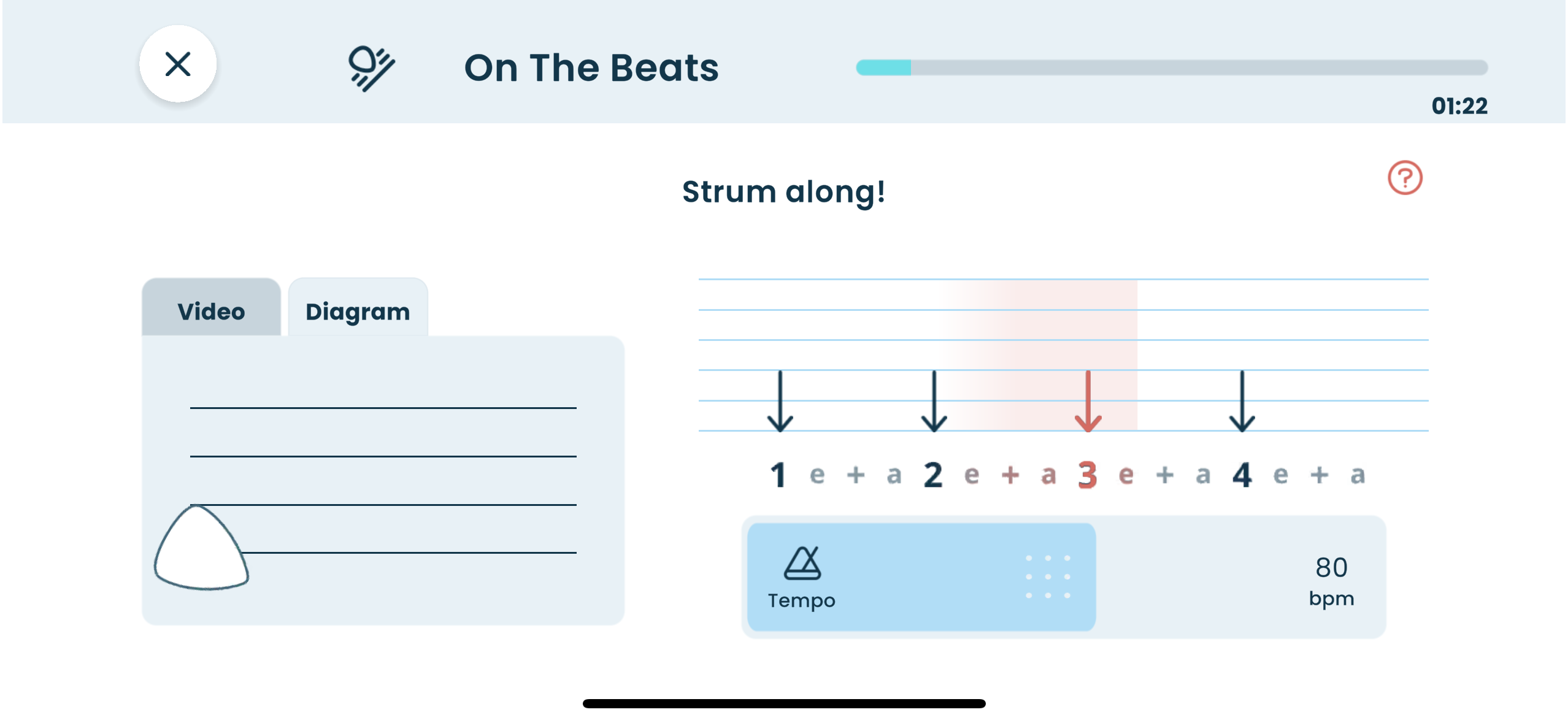
- Use the tempo slider. When practicing a song with dynamic shifts, slow it down so you have time to think about volume as well as chord changes. The Kala App‘s tempo slider lets you slow any song to a comfortable pace without changing the pitch, useful when dynamics and chord transitions feel like too much to manage at once.
It can feel a little awkward at first to think about volume while also thinking about chords and rhythm. That is completely normal. The goal is to make dynamic awareness part of how you listen to yourself as you play, not an extra task on top of everything else. Once it becomes a habit, it stops feeling like effort and starts feeling like music.
Now go put some feeling into it. Try the Kala App and uke on.