
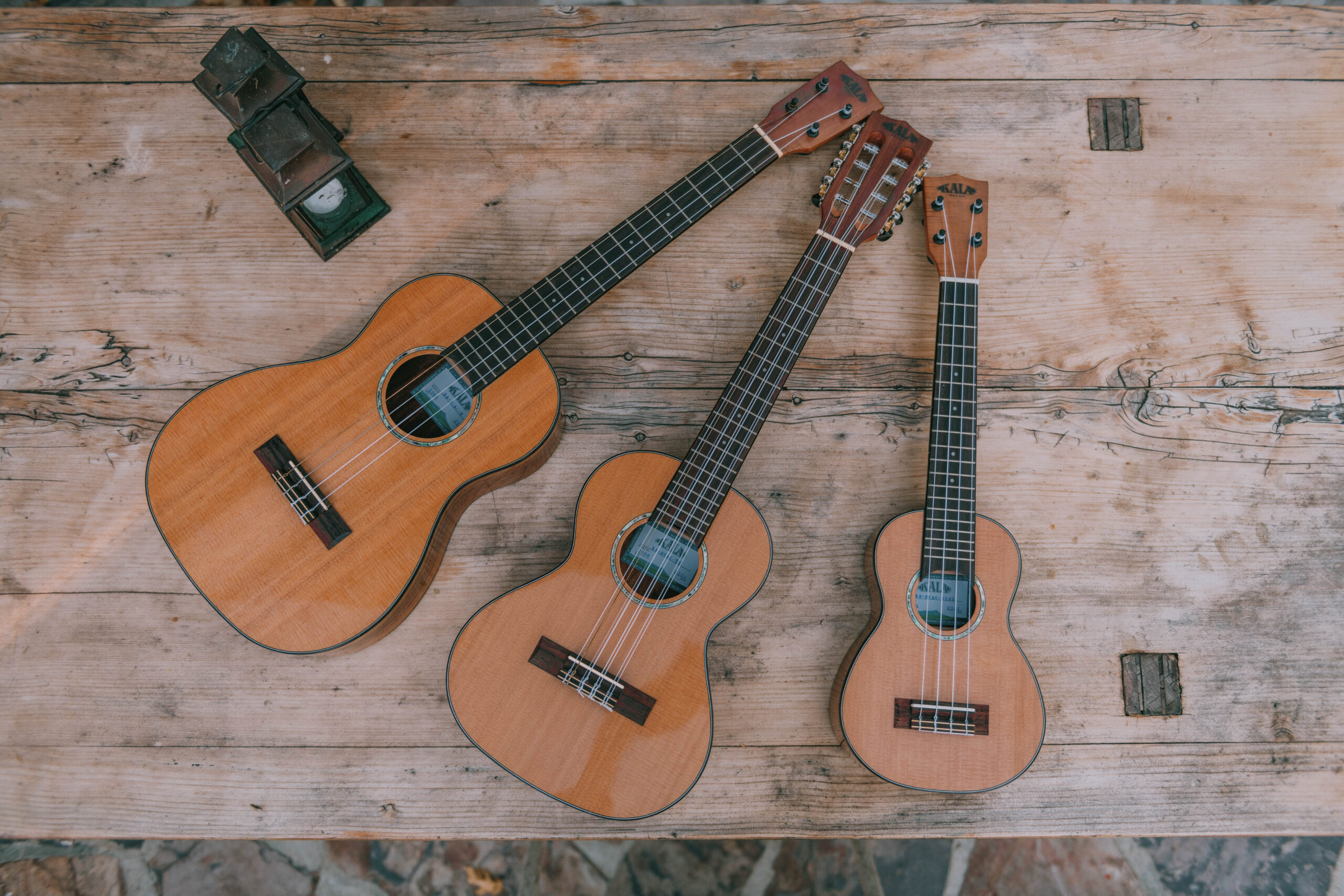
If a ukulele keeps going out of tune every few minutes, the frustration is real — and completely understandable. It feels like something must be wrong with the instrument. Most of the time, though, there is a straightforward explanation, and once you know what is causing it, the fix is simple. This article walks through the most common reasons a ukulele won’t stay in tune, what to do about each one, and how to build a tuning habit that keeps things sounding right from the very first strum.
Common reasons a ukulele won’t stay in tune
Most ukulele tuning problems come down to a handful of causes, and the good news is that none of them mean the instrument is broken. The most frequent culprit is new strings — they stretch as they settle in and will go flat repeatedly until they stabilise. This is so common that it catches almost every beginner off guard.
Beyond strings, the usual suspects include loose tuning pegs, changes in temperature or humidity, and simply not tuning before every session. Ukuleles are small instruments with relatively light tension, which makes them more sensitive to these factors than, say, a steel-string guitar. The strings are also made from nylon or fluorocarbon, materials that respond more noticeably to environmental changes than metal strings do.
One thing worth knowing early: if a ukulele sounds slightly off but the tuner says it is in tune, the problem might be with the nut (the small notched piece at the top of the neck where the strings rest). If a string sits too tightly in its slot, it can catch and release unevenly when tuned, causing it to go sharp or flat almost immediately. A small amount of graphite from a pencil rubbed into the nut slot can help it move more smoothly.
How temperature and humidity affect ukulele tuning
Wood and nylon both react to changes in the environment, and a ukulele left in a cold car, a dry room, or a humid garage will almost always need retuning when it comes back to playing temperature. This is not a flaw — it is just physics.
Heat causes the wood in the body and neck to expand slightly, which changes the tension on the strings. Cold does the opposite. Nylon and fluorocarbon strings are particularly sensitive to temperature shifts, contracting in the cold and going flat, expanding in the heat and going sharp. Even moving from one room to another can be enough to knock the tuning off.
Humidity matters too. Dry air causes the wood to shrink, which can lower the action (the height of the strings above the fretboard) and affect intonation. Excess moisture does the reverse. Players in climates with extreme seasonal swings often notice their ukulele needing more frequent tuning in winter when indoor heating drops humidity levels.
The practical fix is simple: let the ukulele adjust to the room temperature before playing, and always tune at the start of a session. Storing the instrument in a case when not in use helps buffer it from sudden environmental changes.
How to stretch new strings and stabilize tuning faster
New strings are the single biggest reason a ukulele keeps going out of tune, and this is worth saying clearly: it is completely normal. A brand new set of strings can go flat multiple times in a single session. That does not mean anything is wrong.
The reason is simple. Nylon and fluorocarbon strings are elastic, and when they are first installed, they have not yet been put under sustained tension. Every time the ukulele is played, the strings stretch a little more. Until they reach a stable resting point, they will keep going flat.
How to speed up the process
The fastest way to settle new strings is to stretch them manually. After tuning up, gently pull each string away from the fretboard with a finger — not hard enough to snap it, just a firm, steady pull along the length of the string. Retune, then repeat. Do this several times in a row and the strings will stabilise much faster than if left to settle on their own.
Playing regularly also helps. The more the ukulele is played in the first few days after restringing, the faster the strings bed in. Most players find that after three to five days of regular playing and tuning, the strings hold their pitch reliably between sessions. Until then, tune before every session and expect to check the tuning mid-practice too.
Tuning peg problems and when to upgrade
If the strings are well settled and the environment is stable but the ukulele still won’t hold its tuning, the tuning pegs are worth a closer look. Pegs that slip, stick, or feel loose are a common source of tuning instability, especially on entry-level instruments.
There are two main types of tuning pegs on ukuleles. Friction pegs (the simple wooden or plastic variety found on many soprano ukuleles) rely on tension alone to hold their position. Over time, or in dry conditions, they can loosen and slip. Tightening the small screw at the centre of the peg usually helps. If the peg is stripped or cracked, replacement is straightforward and inexpensive.
Geared tuners use a small gear mechanism to translate the turn of the peg into a finer adjustment of string tension. They are more stable than friction pegs and hold their position more reliably. Many players who upgrade from a beginner ukulele notice immediately that the instrument stays in tune for much longer — often because the new instrument has geared tuners rather than friction ones.
If the tuning pegs on a current ukulele are slipping consistently and tightening the screws does not help, replacing them with geared tuners is a worthwhile upgrade. A local music shop or luthier can do this for a modest cost, and it can make a significant difference to how reliably the instrument holds its pitch.
Using an in-app tuner to build a consistent tuning habit
One of the most effective things any player can do to avoid tuning problems is to tune before every single session, without exception. It sounds obvious, but many beginners skip this step when the ukulele sounds roughly okay to their ear. The problem is that “roughly okay” and “in tune” are not the same thing, and an out-of-tune ukulele makes practice actively harder — chords sound muddy, songs feel off, and the ear gets trained to accept the wrong pitches.
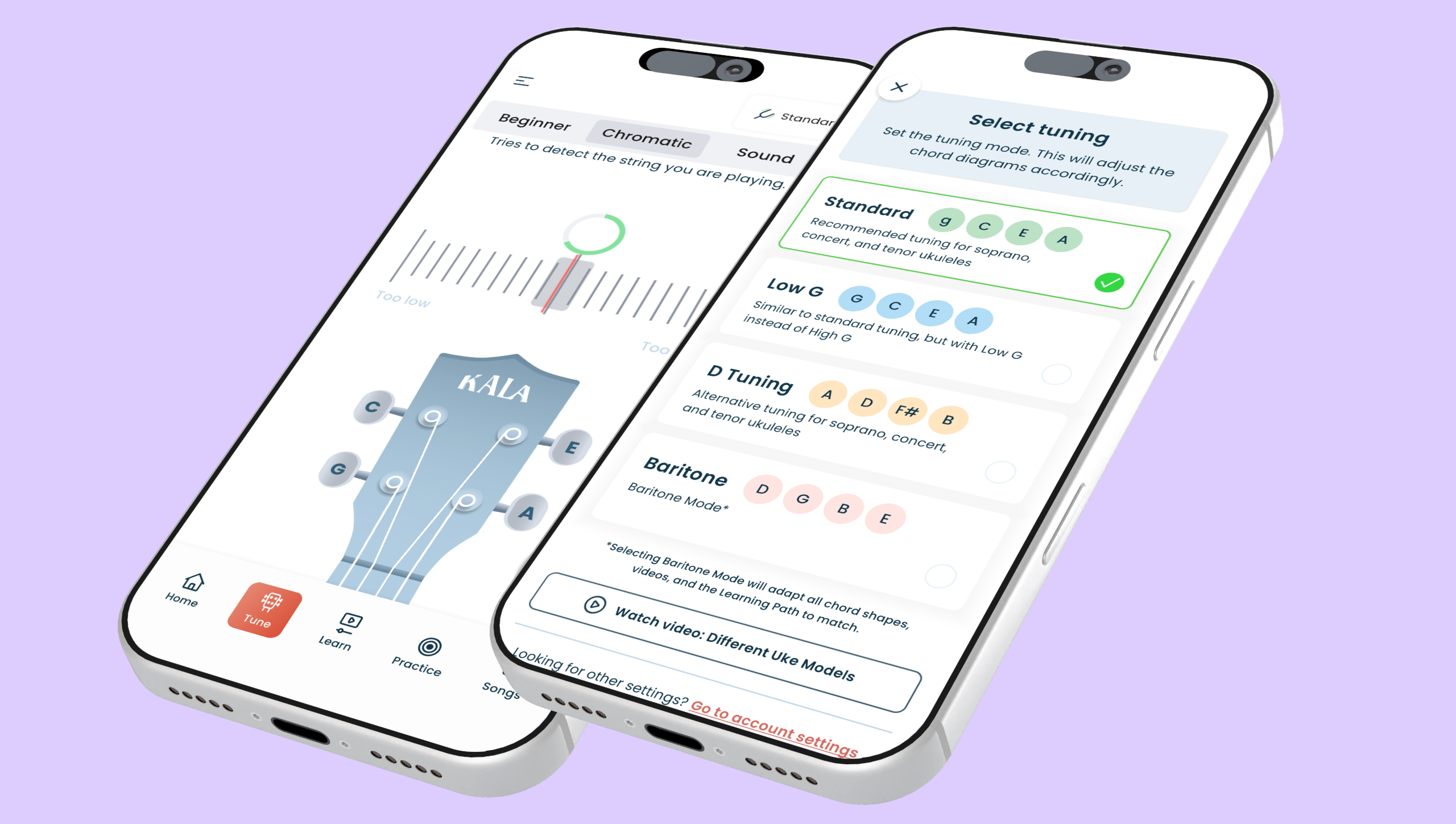
The Beginner Mode tuner in the Kala Ukulele App listens to each string and tells you exactly how close it is to the correct pitch. Pitch, in simple terms, is just how high or low a note sounds. The tuner compares what it hears to the target note and shows whether the string needs to go up or down. Standard ukulele tuning is G-C-E-A — those are the four open string notes from the string closest to the player through to the string furthest away. Always start with the G string and work across to the A.
The Kala App has also built-in chromatic tuner that covers all standard ukulele types — soprano, concert, tenor, and baritone. It uses the device microphone to pick up the sound of each string, then shows a needle that moves toward the centre when the pitch is close. When the display turns green and the needle is centred, the string is in tune. For best results, tune in a quiet space so the microphone picks up the string clearly.
Tuning with a reliable tool every session does two things at once: it keeps the ukulele sounding right, and it gradually trains the ear to recognise what in tune actually sounds like. That ear training happens quietly in the background, but it is one of the most valuable things a beginner can build. After a few weeks of consistent tuning, most players start to notice when something sounds slightly off before they even reach for the tuner.
So tune up, play often, and give those new strings a few days to settle. The ukulele that seemed impossible to keep in tune will start behaving itself sooner than it feels like it will. Uke on.