
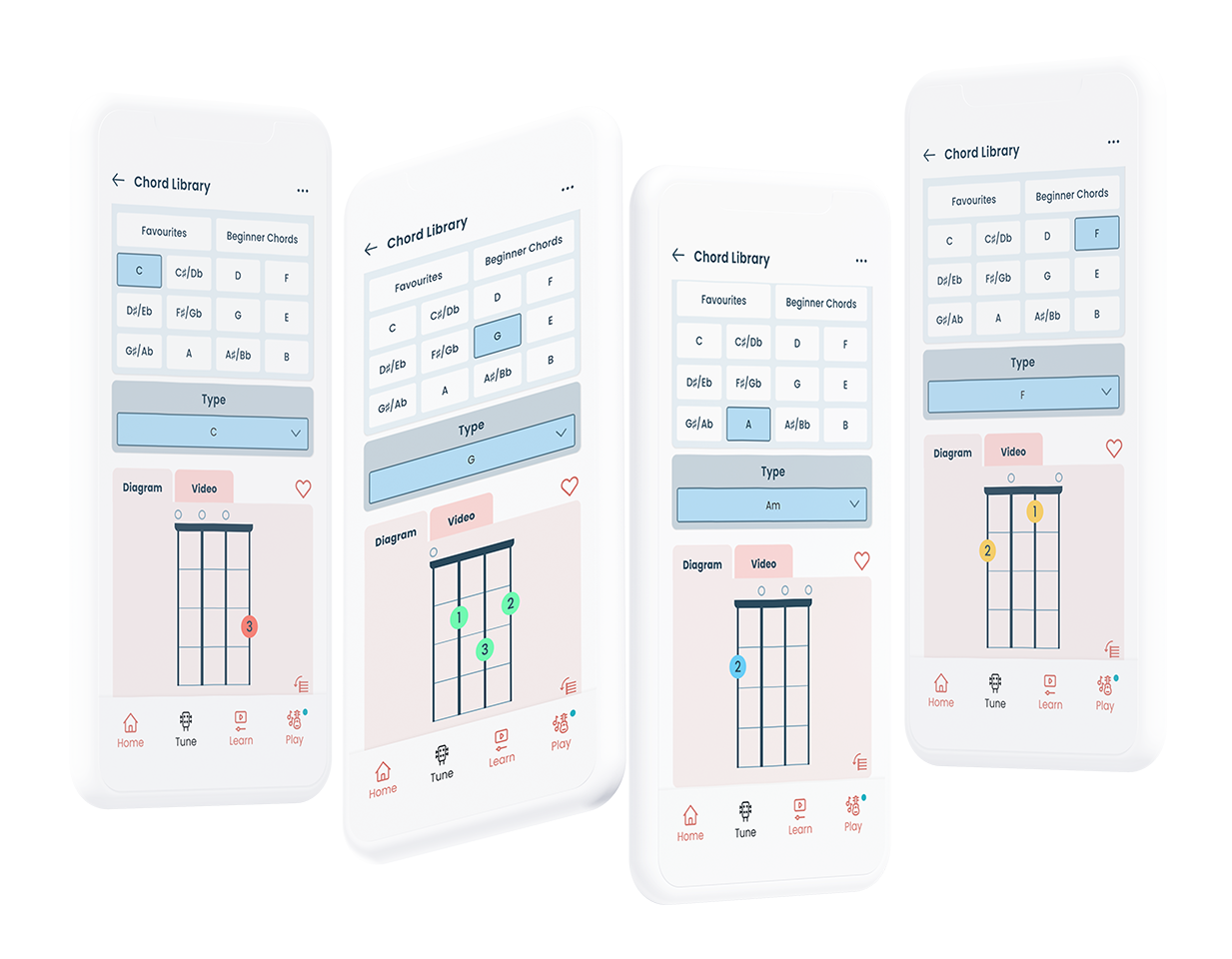
To switch between ukulele chords without losing the beat, the key is to move your fingers as a group rather than one at a time, and to keep your strumming hand moving even when the chord isn’t perfect yet. Most beginners stop strumming the moment a chord change arrives — and that pause is what kills the rhythm. Keep the strum going, and let your fretting hand catch up.
Smooth ukulele chord transitions are less about finger speed and more about preparation: knowing where your fingers are going before you lift them from where they are. The sections below break down the most common questions beginners have about chord changes, from why transitions fall apart in the first place to how long it realistically takes to get them feeling natural.
Why do chord transitions break your rhythm on ukulele?
Chord transitions break rhythm on the ukulele because most beginners stop strumming to focus on their fretting hand. The brain treats the chord change as a pause point — a moment to look down, reposition fingers, and then resume. But the beat doesn’t pause, and neither should your strumming hand. That split-second stop is where the rhythm falls apart.
There’s also a finger sequencing problem. When switching chords, many beginners lift all their fingers at once and then place them one by one on the new chord. That approach works fine at a very slow tempo, but it creates a gap in sound that grows wider the moment the song speeds up.
The good news is that this is a completely normal stage of learning, not a sign that you’re doing something fundamentally wrong. Almost every beginner hits this wall. The fix isn’t to practice faster — it’s to practice smarter, which the sections below cover in detail.
What is the ‘pivot finger’ technique for chord changes?
The pivot finger technique means keeping one finger anchored on the fretboard during a chord change, using it as a fixed point while your other fingers move to their new positions. Instead of lifting every finger off the strings at once, you identify which finger stays in place — or stays closest to where it needs to be — and use it as your pivot point for the transition.
Think of it like musical chairs. You keep your eye on the chair and sit when it comes — you don’t wander across the room and hope to find a seat in time. The pivot finger is your chair: it gives your hand a reference point so the whole transition feels anchored rather than floating.
A practical example: when switching between C and Am on the ukulele, your third finger can stay on the third fret of the bottom string for both chords. That one anchor point means only your other fingers need to move, which cuts the transition time significantly.
Not every chord pair has an obvious pivot finger, but it’s worth looking for one before assuming you need to lift everything. Even moving a finger to an adjacent string rather than lifting it entirely can make the switch noticeably smoother.
How do you practice chord transitions without losing the beat?
The most effective way to practice ukulele chord transitions without losing the beat is to keep your strumming hand moving at all times, even if the fretting hand hasn’t landed cleanly yet. A muted or buzzy strum is far better than a silent pause — silence is what breaks the rhythm for a listener, not an imperfect chord.
Here’s a practice sequence that works well for most beginners:
- Pick two chords only. Don’t try to run through a full song. Isolate the pair that’s giving you trouble — C and G, for example — and switch between just those two on repeat.
- Set a slow tempo. Slow enough that you can land the chord cleanly before the next strum arrives. Uncomfortably slow is fine. Speed comes later.
- Keep the strum going. Even if your fretting hand is still moving into position, let the strumming hand keep its rhythm. It’s okay if it sounds rough at first.
- Gradually increase the tempo. Only move faster once the transition feels automatic at the current speed.
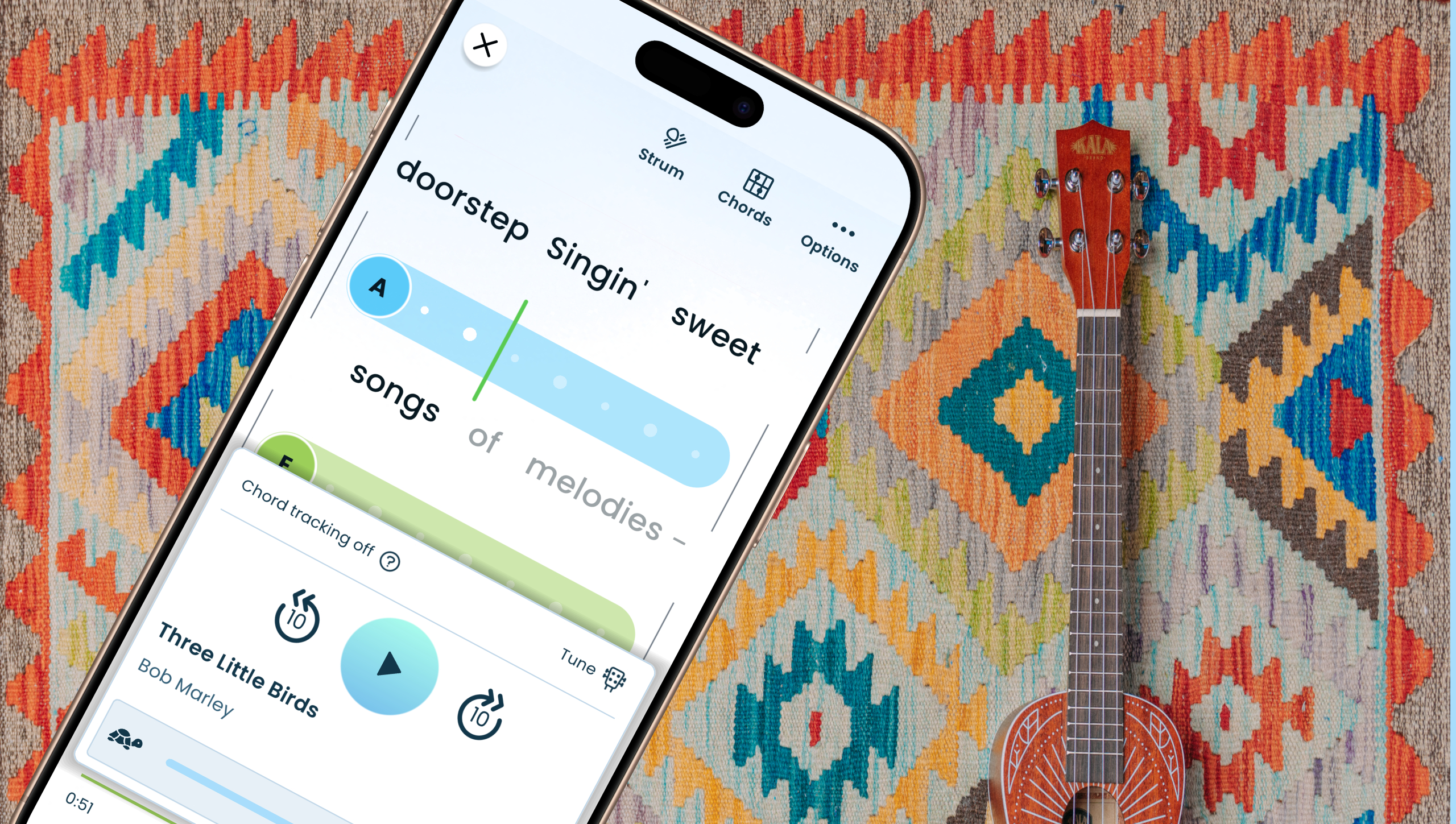
If you’re using the Kala App, the tempo slider on any song lets you slow the backing track right down to whatever speed feels manageable — and you can use the loop feature to repeat just the section with the tricky chord change, so you’re not restarting the whole song every time.
Which ukulele chord pairs are hardest to switch between?
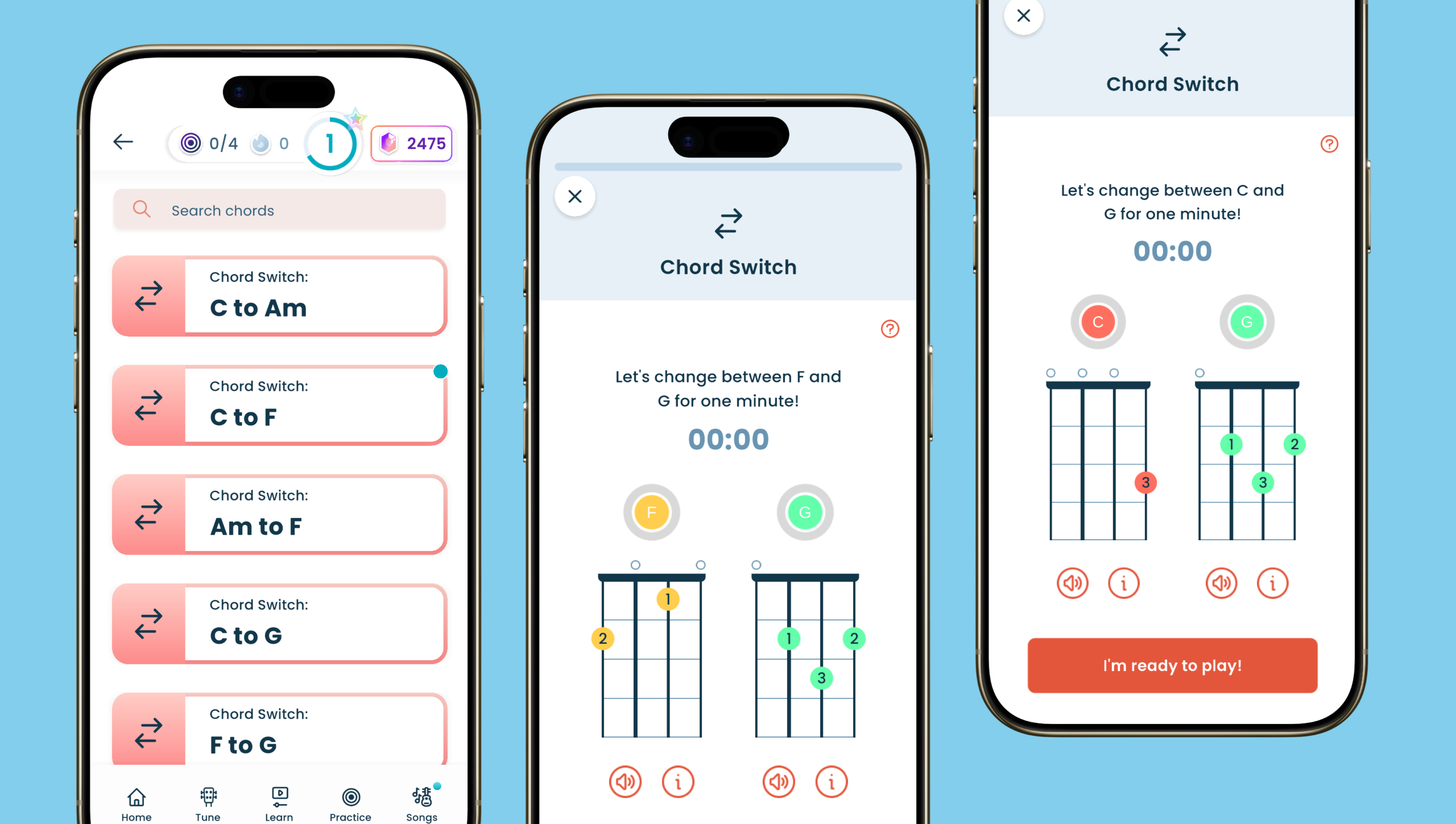
The hardest ukulele chord transitions for beginners are generally those involving the G chord, particularly the C-to-G and F-to-G switches. G requires three fingers placed across different strings and frets, which means more to coordinate in a short window. The Am-to-F transition can also feel awkward early on because it involves a significant repositioning of the hand.
C to G
This is the transition most beginners struggle with first. The C chord uses just one finger; the G chord uses three. That jump from minimal to complex is a real challenge, and it’s completely normal for this one to feel slow at first. The G chord takes a bit more practice than the others — three fingers instead of one or two — but it clicks faster than it feels like it will.
F to G
This transition is tricky because both chords use multiple fingers, but in very different positions. There’s no obvious pivot finger to anchor the move, so the whole hand has to shift. Practicing this one at a very slow tempo — slower than feels necessary — is the most reliable way through it.
Am to F
Am and F share a finger on the second fret of the G string, which gives you a natural pivot point. The challenge is that many beginners don’t notice this anchor and lift everything anyway. Once you spot the shared finger and keep it in place, this transition becomes one of the easier ones.
How long does it take to get smooth chord changes on ukulele?
Most beginners start to feel noticeably smoother ukulele chord transitions within two to four weeks of consistent daily practice — typically ten to fifteen minutes a day focused on the specific chord pairs giving them trouble. “Smooth” in the early stages means landing the chord cleanly most of the time, not every time. Full fluency across all common chord pairs usually develops over two to three months.
A few things affect the timeline:
- Consistency matters more than duration. Short daily sessions build muscle memory faster than occasional long ones. Ten minutes every day beats an hour on the weekend.
- Which chords you’re working on. C, Am, and F tend to click relatively quickly. G takes longer for most people, and that’s expected.
- Whether you’re practicing transitions directly. Playing full songs is enjoyable, but isolating the specific chord pair that’s causing trouble and drilling just that transition is what accelerates progress.
It’s okay if it sounds rough for a while. The awkward stage is not a sign you’re doing it wrong — it’s just the stage before it clicks. If you miss a transition, keep going and try again on the next pass. The structured Learning Path in the Kala App is designed to introduce chord pairs in an order that builds on what you already know, so each new transition feels like a smaller step rather than a leap.
Keep showing up, keep the strum going, and the smoothness will come. Uke on.