
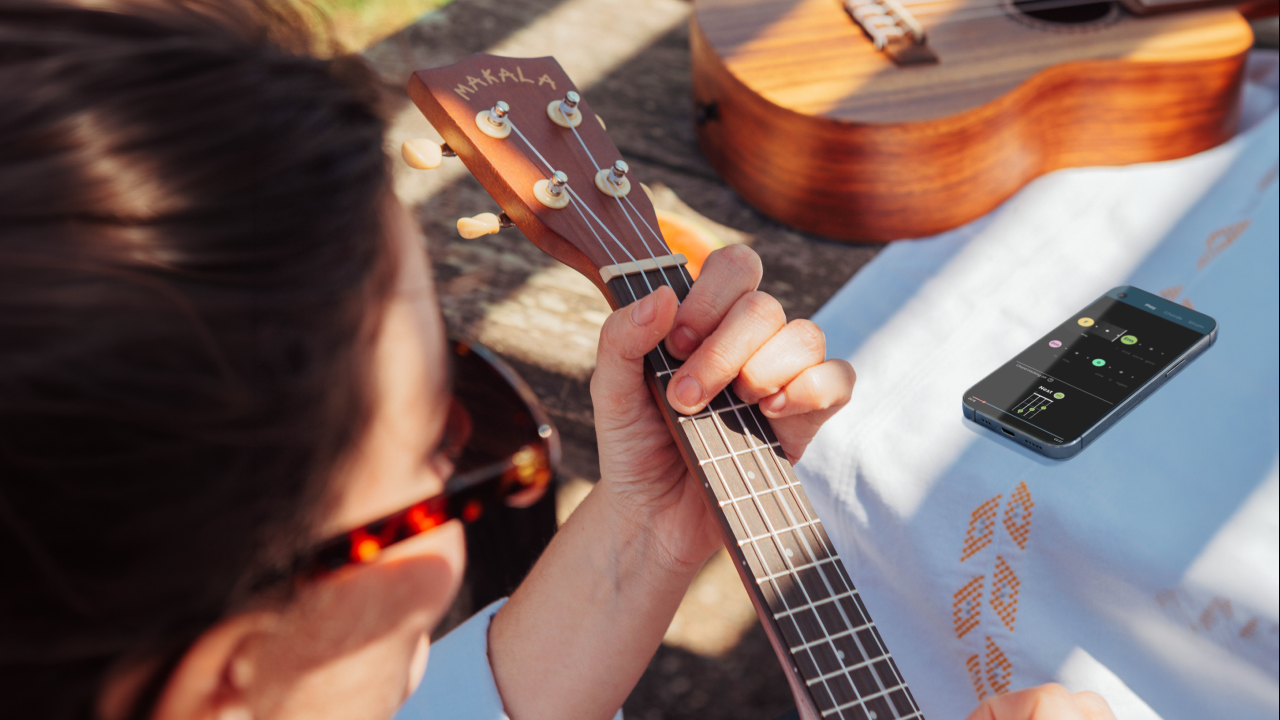
Yes, you can absolutely teach yourself ukulele. Thousands of people learn entirely on their own, and the ukulele is one of the most beginner-friendly instruments out there — a small number of chords will get you playing real songs faster than almost any other instrument. The key is having a structured approach rather than just noodling around and hoping for the best. Below, we answer the most common questions self-taught beginners have before they start.

How long does it take to teach yourself ukulele?
Most beginners can play a simple two- or three-chord song within their first week of consistent practice. Getting comfortable with the four core beginner chords — C, Am, F, and G — and switching between them smoothly typically takes one to three months, depending on how often you practice and how you structure your sessions.
That timeline assumes you’re putting in around 15 to 20 minutes a day. Short, focused sessions beat long, infrequent ones every time. Think of it like building a physical habit — a little every day compounds faster than you’d expect.
The bigger variable is not talent or musical background. It’s structure. Learners who follow a clear progression, where each lesson builds on the last, tend to move noticeably faster than those who jump between random YouTube videos with no thread connecting them. A structured learning path removes the guesswork and keeps momentum going when things feel slow.
What do you actually need to start learning ukulele at home?
To start learning ukulele at home, you need three things: a ukulele in tune, a structured source of lessons, and a consistent practice habit. That’s genuinely it. You don’t need music theory, a background in another instrument, or expensive gear to get started.
A soprano or concert ukulele is the most common starting point — they’re affordable, compact, and easy to hold. Tenor ukuleles are slightly larger, with a fuller sound, and work just as well for beginners. What matters more than the model is that the instrument stays in tune, because a ukulele even slightly out of tune will sound off no matter how well you play.
For lessons, a mix of chord diagrams, video instruction, and songs to practice on gives you the most complete foundation. The chord library in the Kala Ukulele App covers 200+ chord shapes with fingering diagrams, so you’re never stuck hunting for how a chord is played. Pair that with a built-in tuner and you’ve covered the two most common friction points before they slow you down.
What’s the difference between learning ukulele with an app versus a teacher?
The main difference is flexibility versus real-time feedback. A private teacher can watch your hand position, catch technique problems early, and adapt the lesson on the spot. An app lets you learn on your own schedule, repeat lessons as many times as you need, and practice at 11pm without bothering anyone. For most beginners, an app is the more practical starting point.
Private lessons are genuinely valuable, but they’re also expensive and logistically awkward for many people. If you can only practice twice a week when your teacher is available, progress slows. Self-directed learning through an app means you can pick up the ukulele whenever you have 15 minutes, which adds up quickly.
The gap that used to make teachers essential — structured progression and honest feedback on whether you’re playing correctly — has narrowed significantly. Apps like the Kala App offer a structured Learning Path designed by real ukulele teachers, with real-time feedback built into the interactive exercises. It’s not identical to a human teacher sitting across from you, but it’s a long way from just watching random videos.
One honest note: if you develop a persistent technique problem — an awkward strumming angle, tension in your fretting hand — a single session with a teacher can save weeks of frustration. Many self-taught players use a teacher occasionally as a check-in rather than as their primary learning method.
What are the first chords a self-taught ukulele player should learn?
The first chords to learn on ukulele are C, Am, F, and G — in roughly that order. These four chords appear in an enormous number of popular songs, which means you’ll be playing music you actually recognize almost immediately. Start with C and Am, get comfortable switching between them, then add F, and finally G.
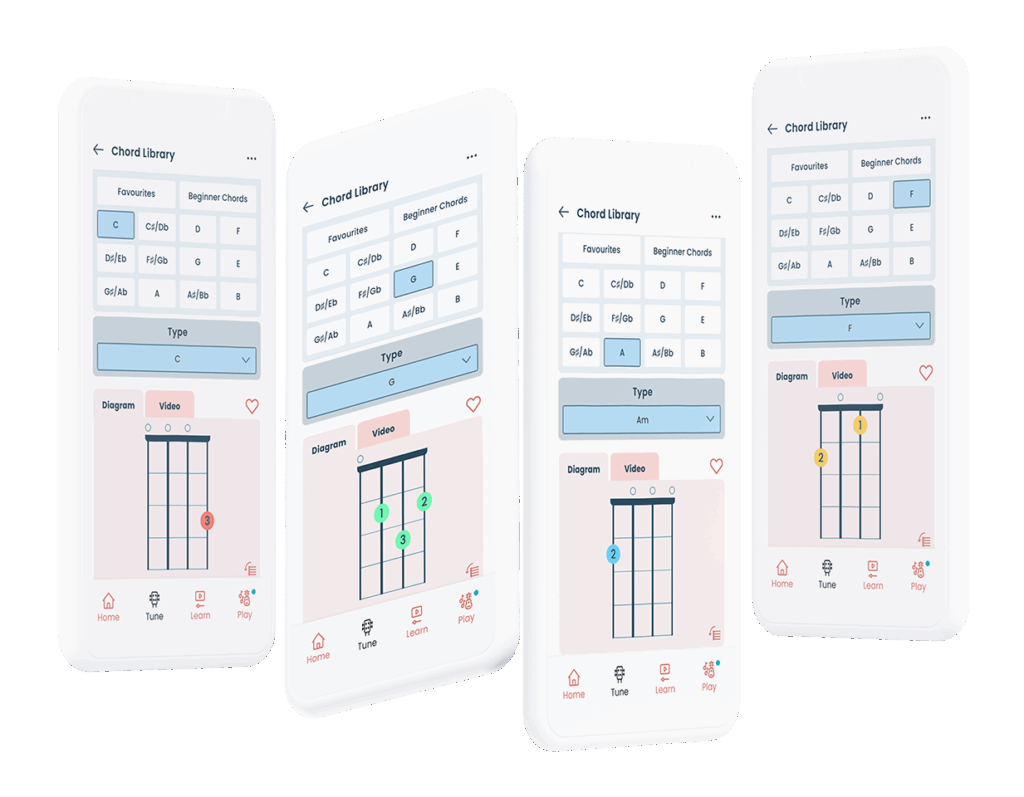
C chord is the friendliest starting point — it only needs one finger. Am uses two fingers and shares a similar shape, which makes the C to Am switch a natural first transition to practice.
F chord introduces a small stretch but is still manageable early on. G takes a bit more practice than the others — three fingers instead of one or two — but it clicks faster than it feels like it will. Don’t rush it. Let C, Am, and F feel comfortable before you spend serious time on G.
The goal isn’t to memorise each chord in isolation. It’s to get smooth at moving between them. Think of chord transitions like musical chairs — keep your eye on where your fingers are going, and trust that the muscle memory builds with repetition. A few minutes of focused transition practice each session will get you there.
How do you know if you’re making progress when learning on your own?
Progress when learning ukulele on your own shows up in three ways: chord transitions feel more automatic, songs you struggled with start to feel manageable, and you spend less time looking at your fretting hand. These are real, measurable signs — even if they don’t always feel dramatic in the moment.
The tricky part about self-teaching is that progress can feel invisible. You practice every day, and it’s hard to see the difference from one session to the next. That’s normal. The improvement is happening; it just accumulates gradually rather than arriving in obvious jumps.
One practical approach is to record yourself playing the same song every two weeks. Listening back is often more revealing than any in-the-moment feeling — you’ll hear things you couldn’t hear while playing. It’s a simple way to make progress concrete.
If you’re using a structured app, progress tracking does some of this work for you. Completed lessons, songs you can now play all the way through, milestones you’ve actually hit — these make momentum visible rather than something you have to take on faith. That visibility matters more than it sounds, especially in the early weeks when it’s easy to feel like you’re not moving forward.
So get your ukulele in tune, pick your first two chords, and start. You’ve got this. Uke on.